

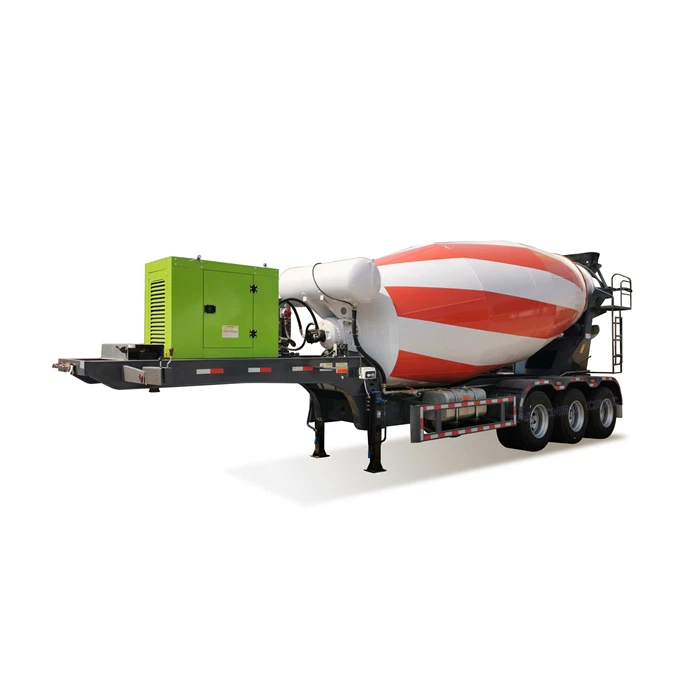
Jinan East China CIMC Special Vehicle Co.,Ltd. is one of the leading manufacturers and suppliers of concrete mixer semi trailer guide – what is a concrete/cement mixer semi trailer? in China. We warmly welcome you to buy concrete mixer semi trailer guide – what is a concrete/cement mixer semi trailer? for sale here from our factory. Contact us for more details.
What is a concrete mixer semi trailer? Are you confused about how to choose a concrete mixer semi trailer? Do you want to learn more about cement mixer trailers?
Compared with concrete mixer semi trailer VS concrete mixer, how to choose a trailer that is more suitable for your work is the best choice?
In this guide, you will learn all about concrete mixer semi trailer. We will show you how to choose the best concrete/cement mixer trailer for your business. You can follow this guide to get a cost-effective concrete mixer semi trailer.
cement mixer truck/concrete mixer trailer.pdf download
Table of Contents
• Chapter 1: What is a concrete mixer semi trailer?
1.1 History of concrete mixer semi trailer
1.2 Application and advantages of concrete mixer semi trailer
1.3 Different types of mixer trailers
1.4 Structure of concrete mixer semi trailer
• Chapter 2: Working Principle of concrete mixer semi trailer
• Chapter 3: Factors to consider when buying a concrete mixer semi trailer
3.1 How to choose the right model
3.2 How to choose applicable parts
3.3 The production process of concrete mixer semi trailer
3.4 How to choose a good supplier
• Chapter 4: Drawings of concrete mixer semi trailer
• Chapter 5: Quality Control Of Concrete Mixer Semi Trailer
• Chapter 6: Concrete Mixer Semi Trailer In China
6.1 Is The Quality Of China's Concrete Mixer Semi Trailer Low?
6.2 Types Of Mixing Trailers That China Can Provide
• Chapter 7: Capacity For Choosing Concrete Mixer Semi Trailer
7.1 How To Choose The Capacity Of The Concrete Mixer Semi Trailer
7.2 How To Choose The Number Of Axles For Concrete Trailers
• Chapter 8: Operation And Maintenance Of Concrete Mixer Semi Trailer
Chapter 1: What is a Concrete Mixer Semi Trailer?
Concrete mixer semi trailer is a special trailer used to transport concrete for construction, which can effectively transport concrete or other mixtures to the construction site. In this chapter, you will learn:
l The History Of Concrete Mixer Semi Trailer
l Application And Advantages Of Concrete Mixer Semi Trailer
l Different Types Of Mixer Trailers
l Structure Of Concrete Mixer Semi Trailer
1.1The History Of Concrete Mixer Semi Trailer
One of the earliest concrete mixers was developed by TL Smith of Milwaukee in 1900. The mixer has shown the basic structure that is common at present, with a tiltable conical drum with a drum (then it was a double hoppers).
In 1925, at least two mixers (serial numbers 37 and 82) made 25 years ago were still in use. The Smith mascot essentially has the same structure as the small mixers currently used. In the 1920s, TL Smith Company of Milwaukee manufactured the world's largest concrete mixer.
Over time, various types of concrete mixers have appeared, such as: concrete mixers, concrete mixer trucks, concrete mixer trailers, crawler tractor mixers, etc. Each model has the mixing function of concrete materials, and they can be applied To different scenes, and the Concrete mixer semi trailer was born.
1.2 Application and advantages of Concrete mixer semi trailer
l Application area
Concrete mixer semi trailer is suitable for transporting different concrete mixtures. Next we learn about the most common uses of mixer trailers.
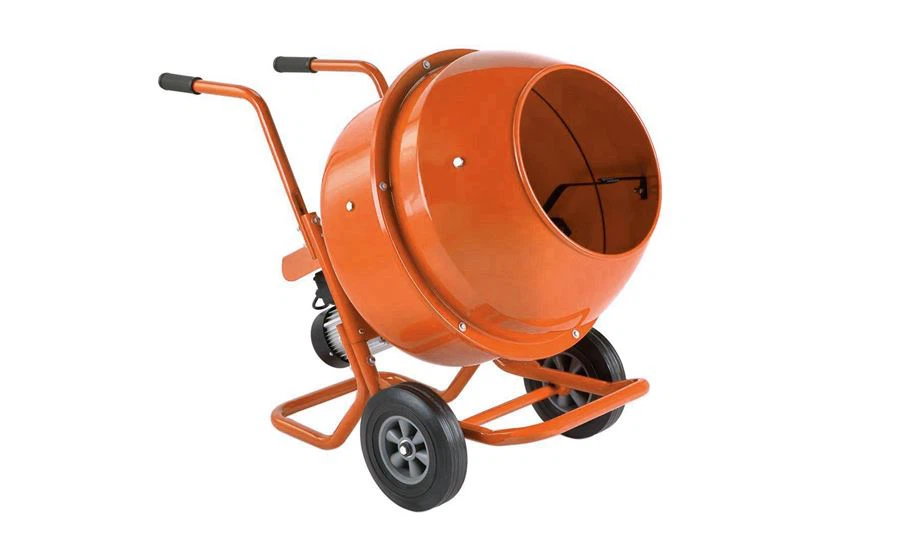
Mixer Machine: is a kind of mixer machinery suitable for small work sites. The model has small external dimensions and light weight, and can be easily moved to any construction site. It is more suitable for families, small construction teams, and emergency rescue use.
The mixer has the advantages of convenient movement, electric rotation, small size and no space.
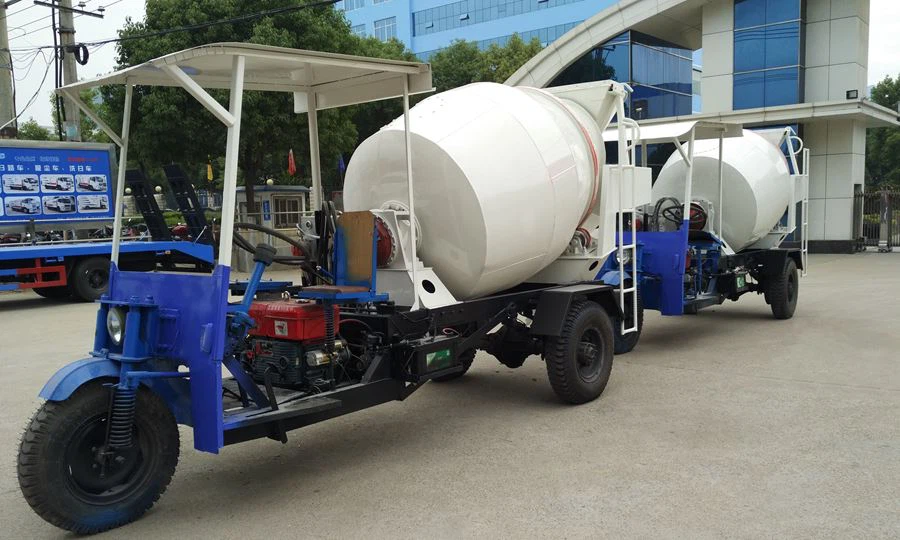
Small Mechanical Mixer: It is a kind of mixing equipment that installs the mixer equipment on small vehicles. Its length is generally within 5M, width is less than 1.8M, and height is less than 2.1M. The Small mechanical mixer can be freely entered and exited to any construction site. The narrow working environment, refurbished companies, and short-distance city shuttles have very effective use value.
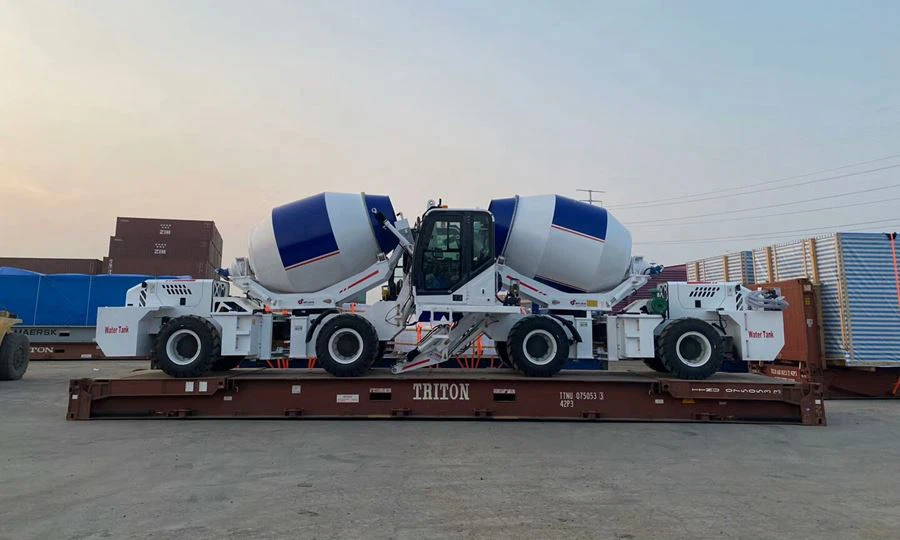
Self-Loading Mixer Truck: The automatic water feeding mixer can be equipped with hydraulic electronic weighing, which can accurately weigh sand, gravel and cement, and can automatically quantify water to make the concrete ratio more accurate.
Self-loading mixer truck combines the functions of the existing concrete transport truck and the mixing station. Self-loading mixer truck can automatically load, measure, mixer, and unload, realizing the integration of transportation and on-site construction operations. Greatly improve efficiency and equipment utilization, reduce labor costs! The automatic feeding mixer has reasonable design, compact structure, flexible operation, convenient maintenance, and tracking service. It is the engineering machinery equipment for concrete construction!
In the outskirts and many small construction sites, it is not cost-effective to mix with large concrete mixer trucks because you have sand and cement. Manual mixing requires too much manpower and is not efficient. Combining the above problems, this equipment: small self-installing and self-installing Unloaded from a concrete mixer truck, it can also be called a four-wheel multifunctional concrete mixer truck, which is a very good choice.
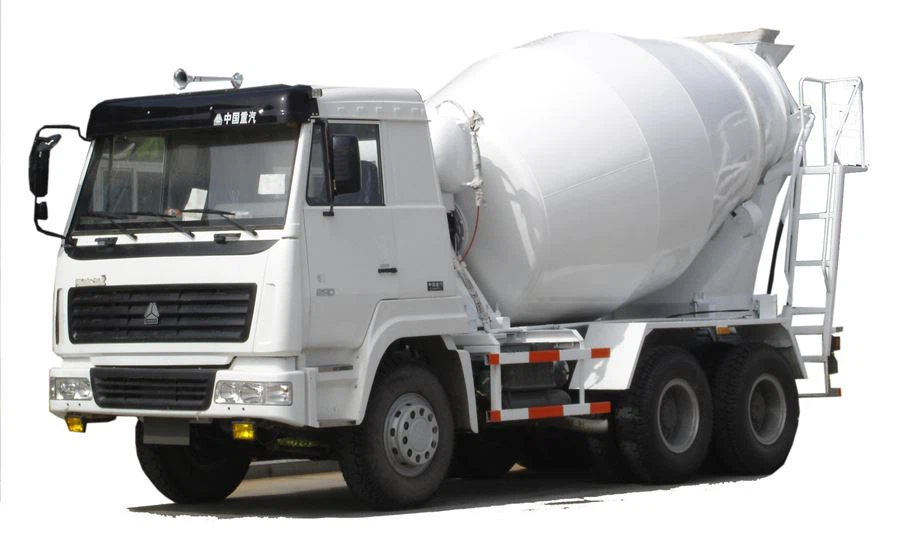
Mixer Truck: A mixer truck is a truck trailer that perfectly combines a mixer and a towing chassis. The mixer truck usually uses the main vehicle to take power to provide power to drive the mixing tank to rotate and complete the unloading or loading.
Working principle of mixer truck is very complete. The power is taken from the chassis through PTO, which drives the variable pump of the hydraulic system, converts the mechanical energy into hydraulic energy, and then transmits it to the constant displacement electric motor. The electric motor drives the reducer, and the reducer drives the mixing device, and then mixes the materials.
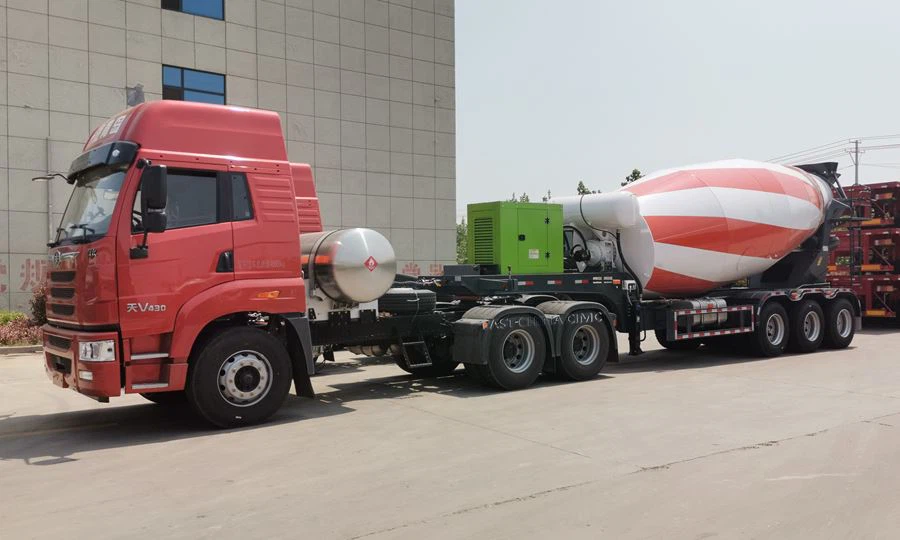
Concrete Mixer Trailers: Concrete Mixer Trailers are suitable for long-distance transportation of concrete or other bulk concrete. The currently power system designed mixer trailers have two types: parking power(PTO) and independent diesel power system operation. This type of trailer has a large volume and a larger load capacity. Divided into 12/14/16/18 cubic, or even more.
Advantages Of Concrete Mixer Semi Trailer
Concrete Mixer Semi Trailer are widely used in different fields due to their advantages over other mixer machinery. The main advantages are summarized below.
Economic benefit
Compared with other mixer machinery, the concrete mixer semi trailer is excellent. The larger volume can meet the requirement of single transportation of more concrete mixture. Therefore, when transporting concrete, the concrete mixing trailer is more economical than the mixer.
Larger volume is one of the biggest advantages of mixing trailers. Compared with mixers, mixer trucks, and other mixing machinery, it can customize the volume of the tank. The currently known effective volume is 12/14/16/18 cubic, or even more. big.
Stability
Due to concrete mixer independent working system, the concrete mixing trailer can be free from any external supply intervention. Compared with mixers and other equipment, the mixing trailer can transport a large amount of concrete from the mixing station to the construction site dozens of kilometers away, even if there is no construction site. With power supply, he can also unload a sufficient amount of concrete to the destination point.
Safety
The mixing trailer has an independent power supply system. In remote construction sites, it can still rely on an independent diesel engine for power to complete concrete unloading.
The mixing trailer with PTO system can also meet the requirements of transporting the concrete mixture to the designated place, the power system provided by the tractor will drive the mixing tank to work, which is more suitable for extremely bad weather, and can also unload the concrete mixture safely and efficiently.
Volume and size
The biggest advantage of mixing trailers that is different from other types of mixing machinery is that the mixing trailers can be customized for large-capacity tanks, usually the capacity of the mixer is about 2 to 6 cbm.
The capacity of the mixer truck is limited by the length of the chassis of the tractor, which is generally 6/8/10 cbm.
Compared with other models, mixing trailers have more advantages. The length, height, and capacity of the trailers can be customized. Currently, most of the widely designed and used capacities are 12/14/16/18 cbm, and models with more than 20 cbm are being developed and tested.
Multi-Purpose
Mixing trailers are mostly used to transport cement and concrete. In fact, they have more applications, such as: mixing and transporting chemical raw materials, fertilizers, urea, granular materials and other particles. The tank body of the trailer will continue to rotate on the way to the destination. The transported mixture will not solidify, which greatly facilitates the point-to-point transportation of the mixture.
1.3 Different Types Of Concrete Mixing Trailers
On-Site And Portable Concrete Mixer
For smaller jobs, such as residential repairs, renovations, or hobbyist-scale projects, many cubic yards of concrete are usually not required. Bagged cement is easy to mass produce, and a small amount of aggregate and water can be easily obtained in small construction sites. In order to serve this small batch concrete market, there are many types of small portable concrete mixers to choose from.
A typical portable concrete mixer uses a small drum to mix the components. For smaller jobs, the concrete made on the construction site will not waste time, so that workers have enough time to use the concrete before it hardens.
Portable concrete mixers can be powered by gasoline engines, although more commonly they are powered by electric motors that use standard mains current.
These concrete mixers are further subdivided according to their loading mechanism. The cement, sand and other aggregates are put into the hydraulic bucket, and then poured into the mixing bucket for final mixing. They can be removed by tilting the rollers. In the manual feeding concrete mixer, the cement, sand and other aggregates are directly manually added to the mixing drum. Both types of concrete mixers are popular in construction activities in Africa, some Middle Eastern countries and the Indian subcontinent.
Industrial mixer
For the industrial production of ready mixed concrete, today's market increasingly requires consistent homogeneity and short mixing time, especially for Precast / prestressed concrete. This leads to the improvement of mixing technology for concrete production. Different types of fixed mixers have been developed, each with its inherent advantages and can be targeted at different parts of the concrete production market. Today's most commonly used mixers fall into three categories:
2-Axles Concrete Mixer For Concrete Plant
2 axles concrete mixer is famous for high-intensity mixing and short mixing time. These mixers are usually used for high-strength concrete, RCC and SCC, and are usually used in batches of 2-6 m 3 (2.6-7.8 cudd).
Vertical Axles Mixers
Vertical axles mixers are most commonly used for precast and prestressed concrete. This type of concrete mixer can be cleaned well between different batches, and is especially suitable for colored concrete, small batches (usually 0.75–3 m 3 or 0.98–3.92 cud) and multiple discharge points. In this category, pot mixers are gradually losing the status of more efficient planetary (or counter current) mixers. [3] The additional mixing effect helps to produce more critical concrete mixtures (color consistency, SCC). Wait).
Drum mixers
Drum mixers (reversible drum mixers and tilting drum mixers) are used where large batches (batch sizes of 3-9 m 3 or 3.9-11.8 cud yd) are produced. This type of concrete mixer can have high output.
All concrete mixer styles have their inherent advantages and disadvantages, and have varying degrees of popularity all over the world.
Mixing Truck Trailer
A cement mixer (concrete mixer) is a special truck used to transport concrete for construction; due to its shape, it is often called a snail trailer. This type of truck is equipped with a cylindrical mixing drum to carry the mixed concrete. During transportation, the mixing drum will always be kept rotating to ensure that the carried concrete will not solidify. After the concrete is transported, the inside of the mixing drum is usually washed with water to prevent the hardened concrete from taking up space.
Specifications of concrete mixer trailer
Item | CLCMT-14 | CLCMT-12 | CLCMT-10 | CLCMT-9 | CLCMT-6 | CLCMT-4 | CLCMT-3 | |
Volume(m3) | 14 | 12 | 10 | 9 | 6 | 4 | 3 | |
Chassis model | Dongfeng,HOWO(Sinotruk), Shaanxi Auto, North Pennines, Isuzu, Foton,Delong | |||||||
Feeding speed | M3/min≥ 3 | |||||||
Unloading speed | M3/min≥ 2 | |||||||
Discharge reside rate | %< 0.5 | |||||||
Water supply model | Air pressure water supply | |||||||
Delivery time | Within 15 work days after receiving the payment | |||||||
Warranty | 12 months, from the date of supply. | |||||||
Remarks | Hydraulic Pump& motor: GMP (Italy) | |||||||
Decelerator: GMP (Italy) | ||||||||
Concrete mixing trailer
Concrete mixing trailer are the main models popular in the European and American markets. They have a large capacity and high loading efficiency, and can carry more concrete at a time. With the changes in market demand, the capacity of the concrete mixer semi trailer has even reached 16cbm and 18cbm. The efficient attendance rate and safe and stable driving have made the concrete mixing trailer popular and sought after by more people.
Reasonable structure application makes concrete mixing trailer have good impact resistance. The secondary structural beam is made of QSTE500 material, box-shaped structure, and the strength is higher. It can effectively bear the impact of climbing, muddy, sharp turns and other complex road driving conditions on the secondary structural beam.
Concrete mixing trailer has a safe, efficient, comfortable and reasonable design, which provides customers in the market with a more professional and excellent choice, and at the same time increases the economic benefits and value of customers.
1.4 Structure Of Concrete Mixer Semi Trailer
At present, there are many types of trailers designed and developed for concrete. Next, let’s share the structure of concrete trailer common models. What are their working principles and structures of concrete mixer semi trailer?
Concrete Mixer Truck
The power is output by the full-power power take-off of the second type chassis, and the power is transmitted to the hydraulic pump through the transmission shaft. The hydraulic energy generated by the hydraulic pump is transmitted to the hydraulic motor through the tubing. The hydraulic motor converts the hydraulic energy into kinetic energy and transmits it through the reducer. For the mixing tank, by adjusting the angle of the servo handle of the hydraulic pump (double-acting variable), the forward and reverse rotation and the speed of the mixing tank can be realized, so as to realize the operations of concrete loading, mixing, stirring, and discharging.
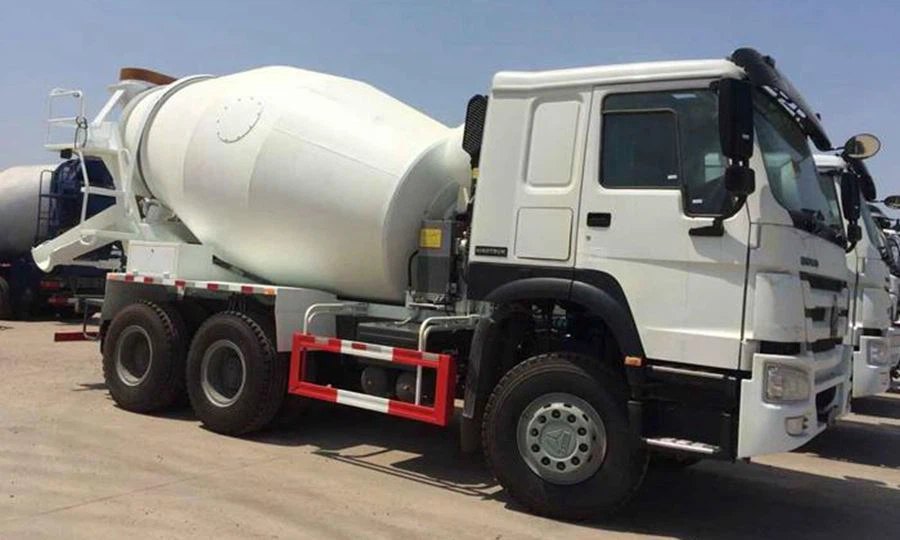
Concrete Mixing Semi Trailer
Concrete mixing semi trailer is designed for long-distance transportation of large volume concrete. The biggest feature that distinguishes it from other mixing machines and mixing trucks is that its capacity is very large, at least 5cbm larger than ordinary mixing machines.
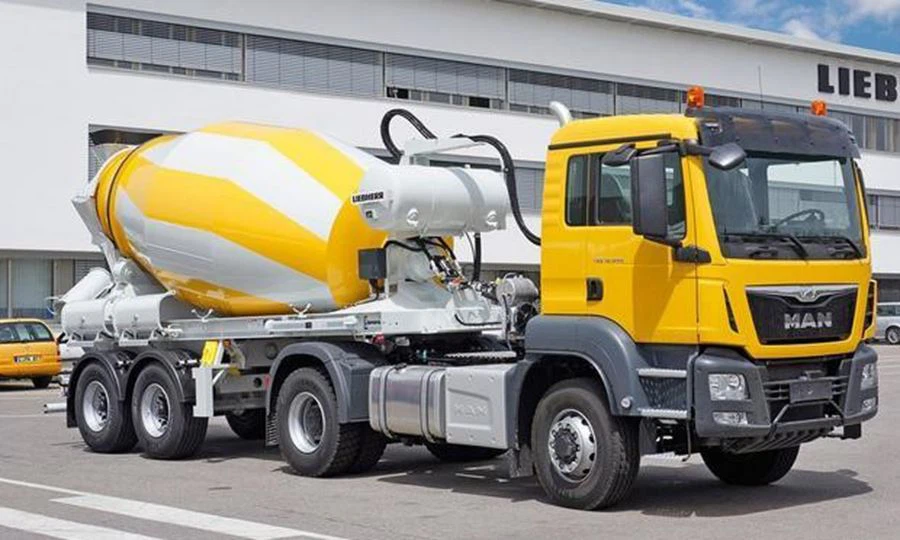
1. Parking force(PTO): use the power device provided by the tractor head to drive the tank body of the concrete mixing trailer to rotate to complete the loading and unloading of concrete and other goods.
The concrete mixing semi trailer adopts a straight beam structure, and the length of the whole vehicle and the total length of the connected train are more than 1 meter shorter than that of competing products, which makes the whole vehicle more stable and has better passability. The concrete mixing semi trailer is also more suitable for the complex working environment of mixing stations and construction sites.
The tank body is driven by a tractor to park and take power, eliminating the need for an independent engine and reducing the failure rate. Moreover, the tank body adopts CIMC's only tank body powder spraying process in the world, which doubles the corrosion resistance and extends the service life of the tank body by 5 to 7 years.
Second: Light weight and low fuel consumption.
According to CAE's analysis of the whole vehicle structure, lightweight design and the elimination of the "burden reduction" of independent engines, the self-weight of the mixing semi-trailer is more than 1 ton lighter than the competition.
Chassis comes standard with CURSOR9 engine, which not only guarantees power output, but also consumes 2-3 liters lower than domestic engines per 100 kilometers in the same road conditions and same operation mode, which significantly improves economic efficiency, which is equivalent to an additional 5% wealth in the full life cycle.
Third, higher security. The chassis of the concrete mixer semi trailer is based on IVECO's advanced heavy-duty truck technology and strict WCM management system, based on the mature GENLYON chassis. The cab, known as the "Grand Lion Hotel", is as comfortable as a mid-to-high-end car; the internationally leading overall cab rearward movement technology, in the event of a collision, the cab safely moves backward by 500mm, ensuring life safety.
This concrete mixer semi trailer uses a 6X4 tractor as the chassis and is matched with a three-axle mixer trailer. Relying on the lightweight technology developed by China, the truck can load about 32.4 tons of concrete, equivalent to about 13.3 cbm of cargo, under the premise that the total weight of the truck does not exceed 49 tons. Compared with the 4-axle mixing vehicle that is commonly used for loading 8 cbm of concrete in the market, it can load 5.3 cbm more in a single time, which greatly increases the revenue for users.
Advantages: This concrete mixer semi trailer can start and run well in cold climate areas, and the extreme weather tractor is relatively easy to start, which can ensure the running power of the concrete mixing trailer.
Disadvantages: The relative power provided to the concrete mixing trailer is relatively low, and the unloading speed is slow.
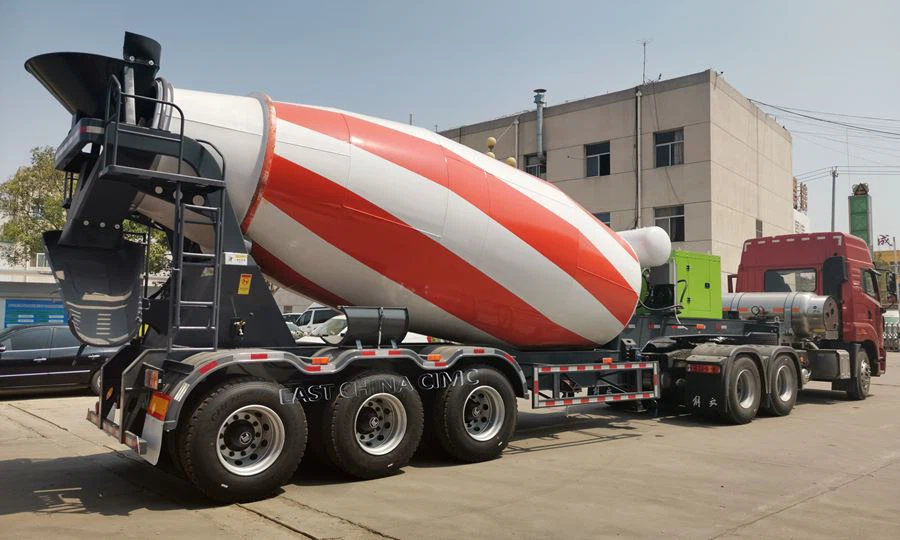
2. Diesel engine power: The concrete mixing trailer adopts an independent diesel engine and is equipped with an imported Italian electric motor system, which can perfectly use independent power and quickly unload the concrete mixture.
This concrete mixing trailer uses high-power diesel power and is equipped with a complete set of systems such as PMP series reducers, motors, and pumps imported from Italy. The strong power enables the trailer to meet the requirements of large-capacity mixture transportation, while also realizing fast unloading. Unlike other types of concrete mixing machinery, the concrete mixer semi trailer has a capacity of 16/18 cbm or more, which is the most economical and is the most cost-effective trailer model.
The system obtains power from the engine through the drive shaft, drives the mixer to rotate through the hydraulic motor and the reducer, and rotates clockwise or counterclockwise under the control of the control system (viewed from the back to the front) to complete the feeding, stirring and discharging functions : Simultaneously control the speed of the entire simplified version. The water supply system provides the flushing of the simplified surface and blades, the function of adding water to the dry material, and the flushing function of the vehicle. Just push the control valve handle to the "landing" position.
Advantages: The front of the concrete mixer trailer is equipped with a high-power independent diesel engine power system, which can be quickly unloaded, safe, stable and efficient.
Disadvantages: It is difficult to start in cold climate areas. In extreme weather, because the diesel engine power system is external, it is necessary to add starter fluid to the external engine to assist the diesel engine to start.
Summary: According to the concrete moisture content of the concrete mixer truck trailer, there are three types of mixer trucks: wet material, dry material and semi-dry material.
Most of the wet concrete mixer trucks are used, which can load concrete produced by the mixing plant (station) or aggregate (sand, gravel), cement and water mixed in proportions. During the transportation, the wet material is continuously mixed slowly.To prevent the initial setting and segregation of concrete during transportation. However, the time from production to pouring of concrete should generally not exceed 1.5 hours to prevent concrete from setting. Therefore, in the case of longer-distance transportation, dry and semi-dry mixing trucks are needed to transport.
The dry material mixing truck can directly load the dry aggregate and cement into the mixing drum of the truck according to the ratio. The dry material in the drum is mixed during the transportation. When the vehicle is about to arrive at the construction site or add water at the construction site Complete mixing of concrete.
The aggregate and cement in the concrete transported by the semi-dry mixer truck are also prepared according to the ratio and contain a certain amount of water, but the water content does not meet the pouring requirements, so the vehicle needs to reach the construction site or on the construction site. Add water and stir.
Chapter 2: Working Principle of Concrete Mixing Trailer
I believe that most of friends are very impressed with the concrete mixer semi trailer after seeing all the models of the mixing tank truck. Next, we will share about how the mixing trailer works? How is its structure different from other mixing machinery?
The concrete mixer truck is modified by adding a special device on the basis of the second-class chassis. The structure of the whole truck mainly consists of the following parts (Figure 1).
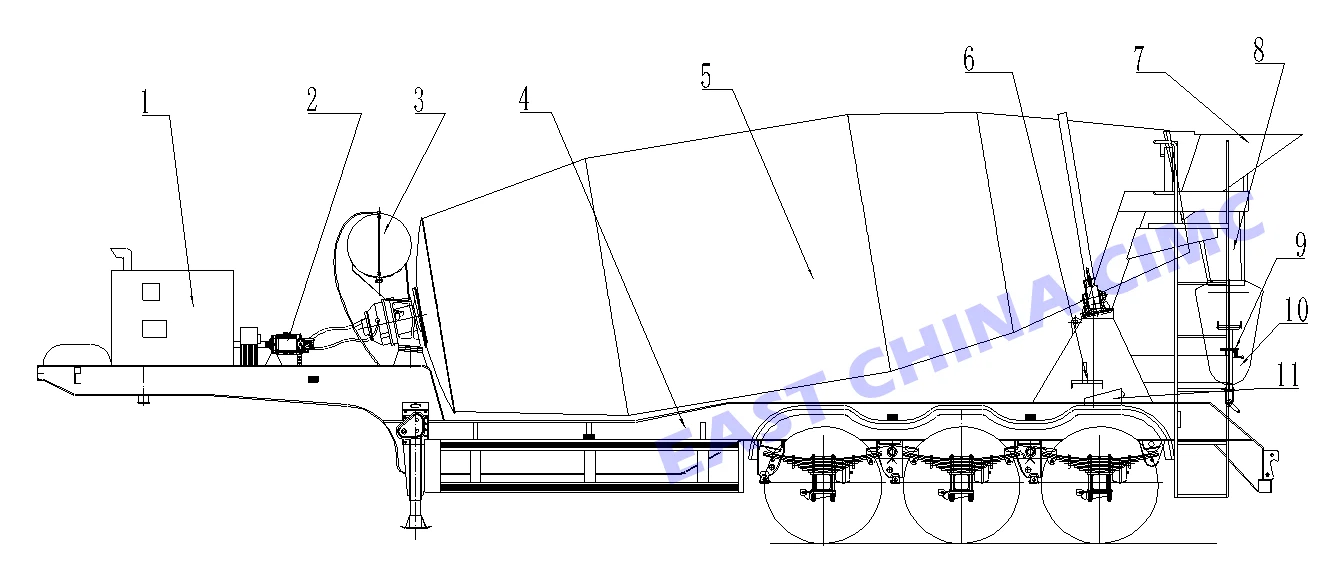
1 - Power System 2 - Hydraulic System 3 - Water System 4 - Chassis 5 - Mixer Device 6 - Control System 7 - Feed Hopper 8 - Discharge Hopper 9 - Lifting Device 10 - Main Tank 11 - Auxiliary Tank
2. Working principle of concrete mixer truck trailer
The system obtains power from the engine through the drive shaft, drives the mixer tank to rotate through the hydraulic motor and the reducer, and rotates clockwise or counterclockwise under the control of the control system (viewed from the back to the front) to complete the feeding, stirring and discharging functions : Simultaneously control the speed of the entire simplified version. The water supply system provides the flushing of the simplified surface and blades, the function of adding water to the dry material, and the flushing function of the concrete mixer truck trailer.
Under normal circumstances, when the concrete mixer trailer is transporting concrete, it will keep the tank rotating to keep the concrete from solidifying during long-distance transportation. When the concrete mixer trailer transports concrete to the designated construction site, the tank body of the concrete trailer will rotate in the opposite direction. At this time, the concrete will quickly release the mixture due to the rotation of the rotating blades inside the trailer tank.
Concrete mixer semi trailer is worth noting that when the unloading is completed, the inside of the tank needs to be rinsed with clean water. When water is injected into the inside of the tank, the rotating blades will assist the residue to mix the water out of the tank to ensure that the inner wall of the tank will not stick. Concrete raw materials, resulting in smaller and smaller tanks.
1. Main Technical Performance Parameters
(1) Mixer Trailer technical parameters
Mixing capacity (m3) | 8-18 |
Form of power take-off | Flywheel power take-off |
Maximum engine speed during unloading (r/min) | About 1500 |
Rotating speed of mixing drum (r/min) | 0-14 hydraulic stepless speed change |
Unloading speed (m/min) | ≥2 |
Residual rate (%) | <0.4 |
Waterway system | Air pressure water supply, optional water pump water supply |
Water tank volume | 450L |
Rotation range of main groove | The horizontal rotation is not less than 180", the vertical adjustment is not less than 40° |
2. Use and Maintenance
(1)Special mixing device-mixing drum and support
(a) Brief introduction of working principle: (Figure 2).
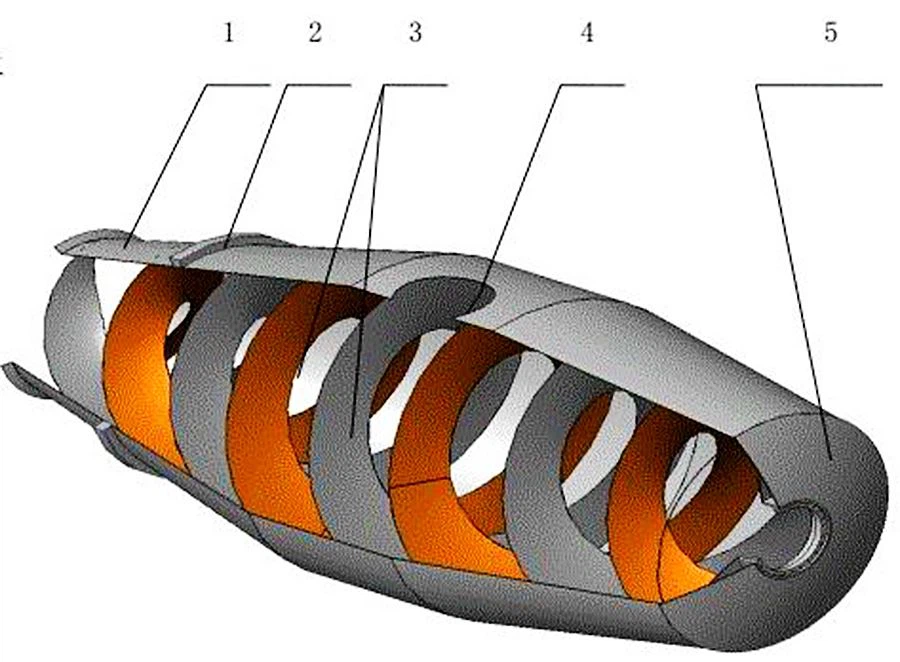
1-Cylinder 2-Roller 3-Mixer Blade 4-Manhole 5-Reducer Connecting Flange
The mixing drum is supported by 3 points (the front part is connected to the reducer by 5 to form a supporting point, and the rear part is formed by two supporting rollers and the raceway to form two supporting points) to ensure stable and reliable operation. The two spiral blades complete the functions of feeding, stirring, and discharging during the rotation process: the simplified and blades are made of high-strength low-alloy steel plate, which has good wear resistance and effectively prolongs the life of the stirring device.
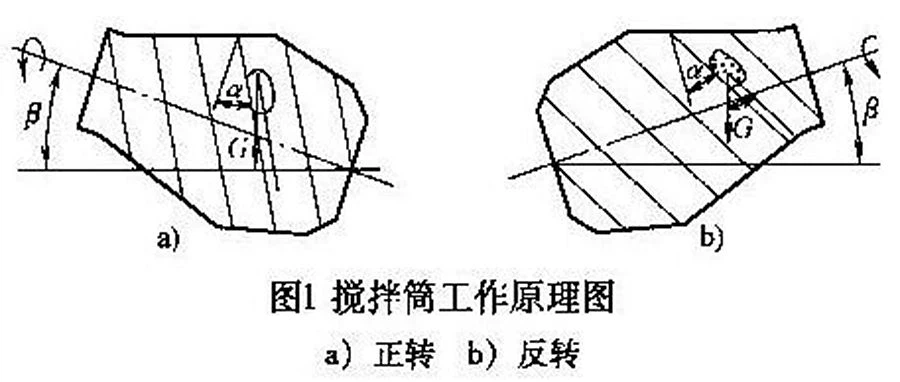
(Figure 1) is a schematic longitudinal section through the axles of the mixing drum. (Figure 1 a, b) are the 2 parts of the mixing drum. The oblique lines in the figure indicate the remaining part of the spiral blades, α is the helix angle, β is the angle between the stirring axis and the plane of the chassis. When working, the mixing drum rotates around its own axis, and the concrete is lifted along the circumference by the rotating drum wall due to the frictional force with the drum wall and the blades and the internal adhesion force. Tumble down and slip. Due to the continuous rotation of the mixing drum, the concrete is continuously being lifted and slipped downwards. At the same time, it is guided by the spiral track defined by the drum wall and the blades, resulting in a compound movement along the tangential and axial directions of the mixing drum. , So that the concrete has been pushed to the end of the spiral blade.
When the mixing drum is rotating forward as shown in (Figure 1a), the concrete will be continuously pushed to the bottom of the mixing drum by the blades. Obviously, the concrete reaching the bottom of the drum will be pushed and turned back by the end wall of the mixing drum. In this way, on the basis of the above movement, the axial rolling movement of the upper and lower layers of the concrete is added, and the concrete is in this complex state of movement. Get agitation. When the mixing drum is reversed as shown in Figure 1b, the spiral direction of the blades is also opposite. At this time, the concrete is guided by the blades to move towards the mixing port until the drum is discharged. In short, the rotation of the mixing drum drives the spiral motion produced by the continuous spiral blades, so that the concrete obtains a "tangential" and "axial" compound movement, so that the concrete mixer drum has the function of mixing or unloading.
According to the structure and working principle of the mixing drum, the working conditions of the mixing conveyor can be described as follows:
1) Loading. The mixing drum is driven by the driving device to make a "positive" rotation with a speed of about 6-10r/min. The concrete or mixing material enters the mixing drum from the pipe through the hopper, and flows to the middle and lower part of the mixing drum under the guidance of the spiral blades.
2) Mix. For the concrete mixing material added to the mixing drum, during the driving of the mixing conveyor or on site, the mixing drum is rotated "positively" at a speed of 8-12r/min, and the mixing material is driven by the rotating drum wall and blades. Stir.
3) Mixing. For the ready-mixed concrete added to the mixing drum, it is only necessary to rotate the mixing drum "positively" at a speed of 1-3r/min during transportation. At this time, the concrete is only slightly disturbed to maintain the homogeneity of the concrete.
4) Unloading. Change the direction of rotation of the mixing drum and make it obtain a "reverse" speed of 6-12r/min. The concrete flows to the mouth of the drum and is discharged through a fixed and movable discharge chute.
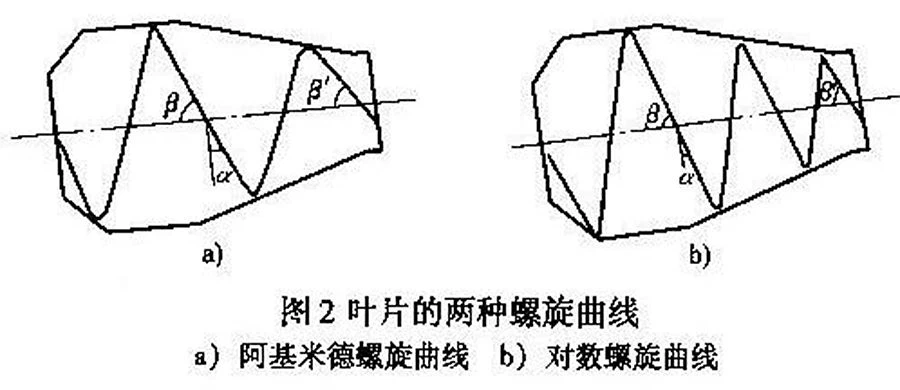
At present, the spiral blades in the mixing drum of the mixing conveyor adopt two practical blade spiral forms, namely Archimedes spiral curve and logarithmic spiral curve. Archimedes spiral curve also called equal pitch spiral. The characteristic of this kind of curved blade is: the pitch of the blades spirally surrounding the drum wall in the direction of the axis of the mixing drum remains constant, but the helix angle of the blades changes inversely with the diameter of the cross section of the mixing drum, as shown in Figure 2a . Logarithmic spiral, that is, equal angle spiral. The helix angle of this blade is always the same, but the pitch changes in proportion to the diameter of the mixing drum, as shown in Figure 2b. It is easier to take into account the performance requirements of mixing and unloading by adopting this kind of spiral blades and choosing a moderate helix angle.
Chapter 3: Factors To Consider When Buying a Concrete Mixer Semi Trailer
l How To Choose The Right Model
l How To Choose Applicable Parts
l The Production Process Of Concrete Mixer Semi Trailer.
l How To Choose a Good Supplier
3.1 How to choose the right model
When choosing a concrete mixer machine, we always imagine what kind of mixer machine is our suitable model. The Next, we will share how to choose a suitable mixer machine model for our work.
When we renovate our own houses, farms, or small-scale construction, the restricted working environment and less use times, the small volume mixer is the best choice. As a household mixing machine, the small mixer is portable and easy to operate. It alhas advantages such as economic benefits etc..
The 2-axle mixer tanker with independent power system is also a common machine for small construction and renovation. It has the advantages of high efficiency, multi-function, easy to carry, and strong adaptability. The 2-axle mixer tanker can not only have a good effect on concrete mixing, but also be used for Mixing equipment for sand ash, feed or other dry or semi-fluid materials. It can be towed by small tractors, pickup trucks, etc. and is one of the most recommended mixing machines.
For construction demolition companies, because the work location changes in real time, and most of the construction sites are far away from the concrete mixing plant, it is particularly important that short-distance transportation can be realized at this time. The concrete mixer truck with larger volume can well meet the requirement of short-distance transportation of concrete. Usually the volume of the concrete mixing truck is 5~10 cbm, and the length is about 9 meters. This allows the mixing truck trailer to have a lot of free access. The construction site is equipped with the strong power system of the tractor and the sturdy chassis. The truck trailer can cope with the complicated road conditions well and is one of the best transportation solutions.
Concrete mixer semi trailer are currently the largest mixing equipment. Usually the capacity is 10cbm-18cbm is the most mature design specification. We have investigated a lot of world-renowned manufacturers, and 20cbm or more are being developed and tested. The trailer is usually equipped with a powerful diesel engine, Italian PMP series pumps, reducers, motors, etc., and has many advantages such as high-efficiency unloading, long-term operation in the field, long-distance transportation, and large-capacity loading of concrete. For construction companies, concrete mixing trailers are the best choice.
3.2 How to choose applicable parts
For concrete mixing trailers, how to choose suitable parts is a very important issue. That will determine whether the trailer you want to buy is the most economical. Next, we will discuss how to choose the right parts for concrete mixer semi trailer.
When choosing a concrete mixing trailer, everyone is always worried about whether the power of the trailer is strong? Is the axle has sufficient load-bearing capacity? Is the quality of the tires the best? Does the volume of the concrete tanker meet your needs?
When these problems are intertwined, we often choose the most expensive parts to configure the trailer. Of course, the most expensive parts definitely determine the best quality of the trailer, but these best accessories may not be the best choice. The most important thing is to choose a trailer while saving costs.
Example: Generally, when the volume of the concrete mixing trailer is 12cbm, the applicable parts configuration is shown in the following table
Mixing Capacity (m3) | 12 |
Axle Quantity/Tonnage | 2/13T FUWA/BPW |
Tire | 8pcs/12R22.5 |
Tank Body/Head | 6/8mm |
Landing Leg | 28T JOST |
Residual Rate (%) | <0.4 |
Water System | Air pressure water supply, optional water pump water supply |
Water Tanker Volume | 450L |
Rotation Range Of Main Groove | The horizontal rotation is not less than 180", the vertical adjustment is not less than 40° |
There are 2 axles configured in the above table. Our investigation found that 16cbm of concrete can also meet the requirements of load capacity when using 2 axles. If the local traffic laws do not specify the number of three axles, you can choose two axles so that you can save costs.
Regarding the configuration of tires, diesel power system, PTO, reducer and other components, there are many combinations.And the correct selection of the configuration of the components can also meet the transportation requirements of the concrete mixer trailer and maximize cost savings.
For areas with cold climates, Concrete mixer trailers with PTO system is different from diesel engine independent power system concrete mixers. Because of the cold climate, engine start-up faces a very big challenge.So that the concrete mixer trailers can work better.
3.3 The production process of concrete mixer semi trailer
Why do we need to understand the manufacturing process of mixing trailers? Should you check the final product and make a decision based on its components?
Knowledge of the manufacturing process is important because it can help you determine whether to buy a high-quality trailer. Some individual workshops cut corners and skipped some important steps in the manufacturing process.
The following is a discussion of all the main steps in the manufacturing process.
Concrete mixing trailers are usually divided into three main structures: power system, chassis, and mixing tank.
1. Power System
The power system usually adopts Weichai series, Yunnei Power and other brands of engines, equipped with Italian PMP series reducers, pumps, motors, etc.
Usually the power system is installed on the gooseneck of the trailer, and a reasonable space configuration accommodates the engine, heat sink, starting battery, pump, motor, reducer, etc.
These parts and components cannot be produced independently by the trailer factory. They usually come from manufacturers of high-quality branded parts and components. Pay attention to check what the power system is equipped with.This is a good help for whether the trailer you choose is of high quality.
2.Chassis
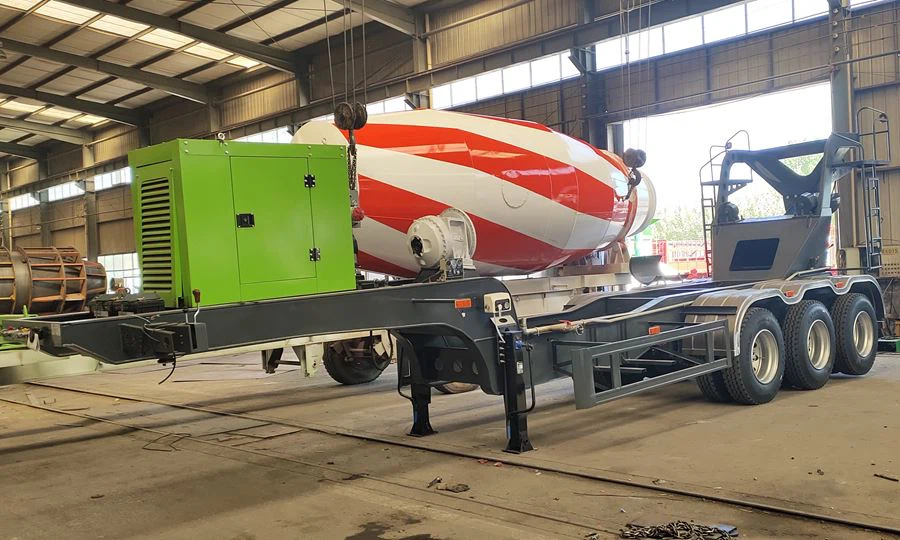
The chassis structure is an important part of the concrete mixer semi trailer. Normally, the height of the girder structure of the trailer is 450~500mm, and the structure is "工"-shaped channel steel. The thickness of the upper and lower parts is 12mm, and the thickness of the vertical plate in the middle is 10mm. There is a side protection frame, and the tail is equipped with a discharge device that can be inclined at any angle.
The steel of the chassis is made of high-strength Q345B, and the strengthen web at the gooseneck to make the chassis stronger. The support point between the chassis and the tank adopts a reasonable cone structure to prevent the trailer from shaking when the trailer is working, which is safe, stable and reliable.
3. Mixer Tank
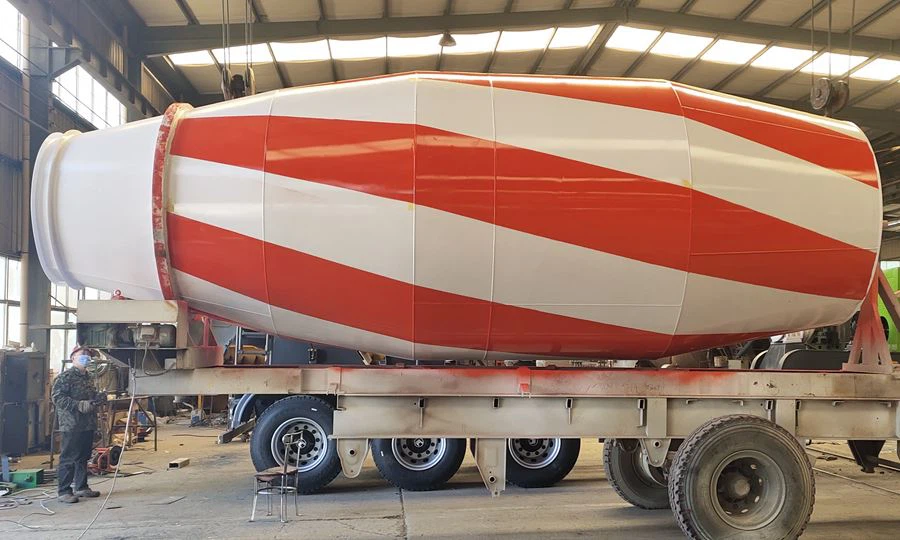
The mixing silo is generally pear-shaped, the bottom (called the back cone) is a shorter cone, the middle is cylindrical, and the upper (front cone) is a longer cone. The study found that the shape of the middle and lower part of the mixing drum is close to the shape of a sphere is the good design.At this time, not only the mixing effect is good, the mixing efficiency is high, but also because the center of gravity of the mixing drum is properly moved forward, it is beneficial to rationally distribute the load of the front and rear axles of the carrying chassis and finally can improve the loading capacity of the mixing conveyor. Therefore, when designing, the length of the back cone plus the spherical crown is basically equal to the radius of the center circle.
Taking 16m³ concrete mixer trailer as an example, the thickness of the tank body of the mixing barrel is usually 6mm, and the thickness of the head is 8mm. The tank body is welded around by a large turning machine, using the welding principle of automatic submerged arc welding, single-sided welding and double-sided forming.
The inside of the tank usually uses 10 to 22 spiral blades to help prevent solidification and rapid discharge during the operation of the concrete mixing trailer. As the volume of the concrete tanker increases, the inclination angle of the tank will increases approximately.
In the following content, we will briefly talk about the indispensable part of the production of trailers. It is very important to maintain the strength and toughness of the steel. The spraying of the same vehicle also affects the future resale value of the trailer. A strict quality management system can better to ensure the perfect delivery of the trailer.
Cutting And Punching
The CNC cutting machine is used to cut steel plates, including webs, reinforcing plates and accessories. In other words, the machine is used to cut all the steel plates needed to make a complete chassis.
Punching is important because it can reduce the weight and pressure of the trailer. In addition, stamping increases the strength of the beam.
The traditional welding machine cutting not only destroys the toughness of the steel, but also is very unsightly. Checking the details of these parts will help you better choose high-quality mixing trailers.
Cleaning And Sandblasting
One of the final stages of the manufacturing process is cleaning and sandblasting the surface. The chassis and accessories of the concrete mix trailer will be placed in the shot blasting machine. And then the fine iron sand less than 0.2mm will impact all parts of the trailer chassis. The purpose of this process is to ensure that the rust on the surface of the trailer is removed so that the trailer will not corrode from the inside to the outside after spraying.
This process is also important for reducing stress concentration in certain parts of the trailer and increasing paint adhesion.
Quality Control
A factory with a complete quality management system will conduct strict inspections after the trailer is completed. First, it is necessary to evaluate whether the welding part of the trailer is tightly seamed, whether there are missing points, and whether the welding points are polished to ensure smoothness and cleanliness, and secondly, the inspection of the trailer after welding Whether the strength of the steel is qualified, the third test whether the parts of the trailer are fastened, etc.
These are only part of the trailer inspection before delivery to ensure high-quality trailer delivery.
3.4 How to choose a good supplier
In the process of globalization, the low-price advantage of Chinese manufacturing has gradually lost. If Chinese suppliers want to survive and develop in the fiercely competitive market, they must make themselves good enough and strive to become high-quality suppliers. So what elements should high-quality trailer suppliers have?
1. Analyze The Market Competition Environment
With the wide variety of products provided by suppliers, our selection space is gradually expanding. At this time, many cheap and low-end products are flooding the international market, and keen dealers will analyze the competitive environment around them to choose brands and economics. Profitable high-end products, they not only bring good reputation, they will also be well resold without worries.
2. Establish Supplier Evaluation Standards
The index system for comprehensive evaluation of suppliers is the basis and standard for the comprehensive evaluation of suppliers by purchasers. It is an index that reflects the different attributes of the complex system formed by the enterprise itself and the environment, and is an orderly collection of subordination and hierarchical structure. Based on the principles of systematic comprehensiveness, conciseness and scientificity, stable comparability, and flexible operability, establish a comprehensive evaluation index system for suppliers in an integrated supply chain management environment.
3. Implement The Partnership
In the process of implementing the cooperative relationship, market demand will continue to change, and the supplier evaluation criteria can be revised in time according to the actual situation, or the supplier evaluation selection can be restarted. When reselecting a supplier, the old supplier should be given enough time to adapt to the change.
4. Factory Site Visit
Seeing is believing is the most intuitive method for supplier selection. We can understand the supplier's quality control, raw material samples, honors, and successful cases on the spot, which will avoid low-quality cooperation.
5. Check The Supplier’s Certification
One of the best ways to determine whether a supplier is reliable is to check its certification. Certification committees and authorities will check the quality of products before issuing certificates to suppliers.
Most vendors claim that their advertisements are certified. You must go further and confirm that the supplier has a good quality certificate.
The main certification committees include ISO, ADR, DOT, CCC, BV, SGS, etc. Please purchase a low-bed trailer from a supplier and obtain a certificate for any of these certifications. Ensure that the certification does not expire.
You can obtain information about supplier certification online.
Supplier selection, learn more details and participate in the discussion
Chapter 4: Drawings Of Concrete Mixer Semi Trailer
We have discussed the different components in the trailer in Chapter 1.4 and how to check some of them in Chapter 3.2. In this chapter, you will see in the schematic diagram how all the components are put together to form a concrete mixer semi trailer.
This chapter includes illustrations of different types of concrete mixing trailers. This section will also explain some dimensions of the concrete mixer trailer and schematic diagrams of different parts.
Concrete Mixing Trailer
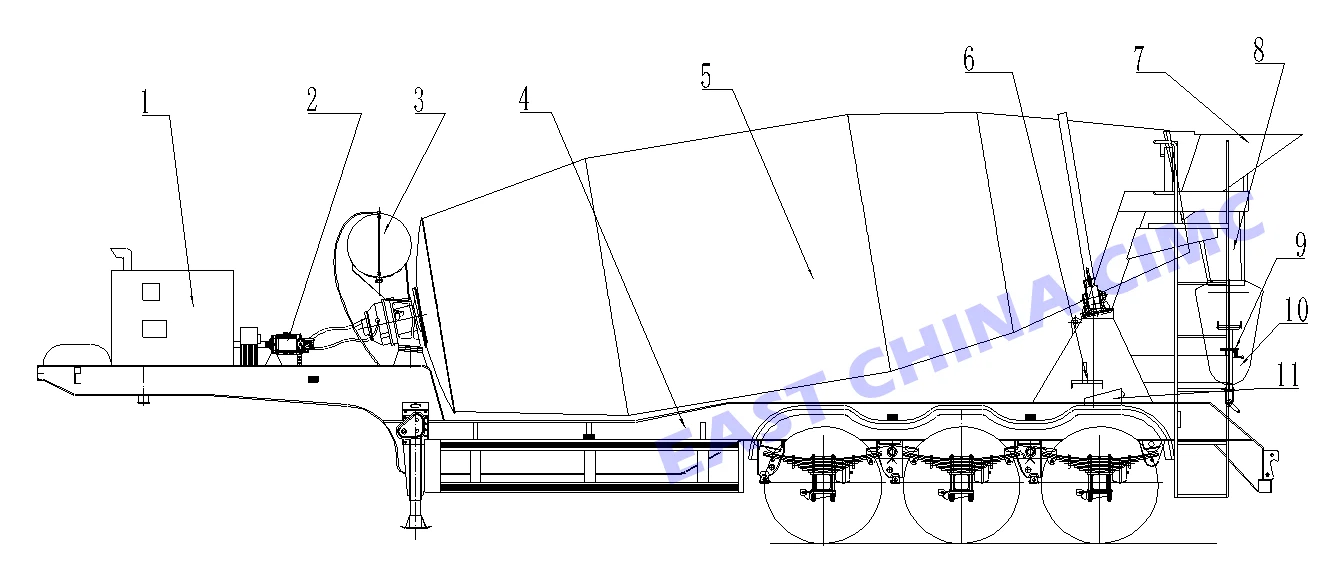
1 - power system 2 - hydraulic system 3 - Water System 4 - frame 5 - mixing device 6 - control system 7 - feed hopper 8 - discharge hopper 9 - lifting device 10 - main tank 11 - auxiliary tank
Concrete mixer semi trailer is widely used in many countries because of its cost-effectiveness and high load capacity. The following figure shows a concrete mixing Trailer with automatic loading capacity. The figure also shows some dimensions of some parts.
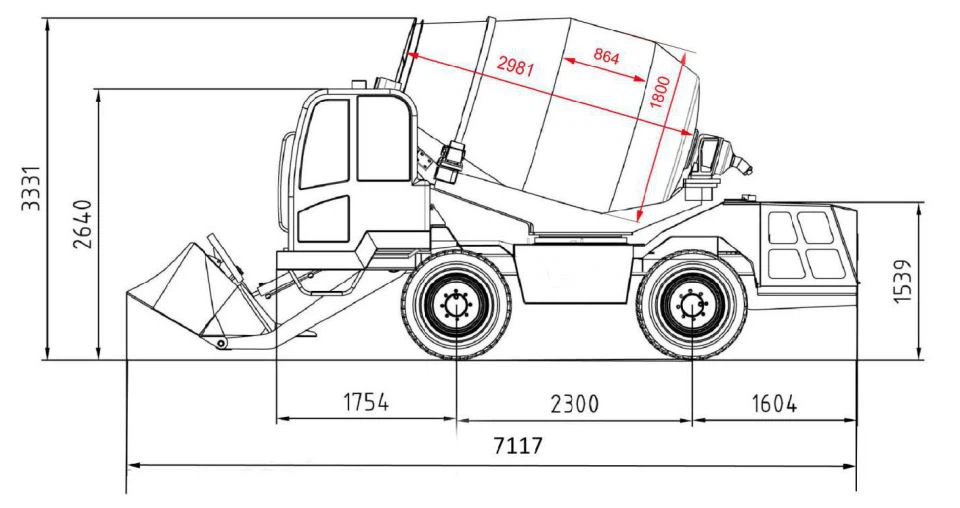
These figures are for reference only. If you need more detailed drawings, please contact us.
Contact Us
Chapter 5: Quality Control Of Concrete Mixer Semi Trailer
In the above article, we have introduced the relevant details of mixing Trailer in detail. We have determined that you need to buy high-quality concrete mixing trailer for your business. The purchase of such trailers will improve efficiency and reduce maintenance costs. However, it is important to ensure that your concrete mixer trailer is always at its best.
This chapter focuses on the quality control process, including:
l Check Whether The Mixing Tank Is Smooth
l Fastener Inspection
l Welding Inspection
l Inspection Of Steel
l Girder Inspection
l Axle Inspection
l Load Test
Check Whether The Surface Is Smooth
The concrete mix trailer will undergo a strict shot blasting process before leaving the factory, which will make the tank body and chassis structure of the trailer more adhesive, make the sprayed paint smoother and adhesive, and reduce the paint falling off due to rust of steel plate material.
You can check the surface of the trailer to determine whether the manufacturer has followed the correct process.
Fastener Inspection
Fastener inspection is to ensure that the chassis of the trailer and all structures fixed with screws are fastened. For example, in the traction pin, suspension structure, tire nut, etc., there is a possibility that the parts are not fully tightened due to the use of automatic bolt tightening machine before leaving the factory. It is very necessary to check the parts. You need firm fasteners to ensure the strength and stability of the trailer, especially when it is fully loaded.
Welding Inspection
When welding chassis and some closed tanks, very strict welding process and good equipment are required. This ensures that these structures do not crack when the trailer is faced with impact forces and torsion caused by poor road conditions.
Many mechanics may take shortcuts in this process. Therefore, care must be taken when checking welded parts and joints.
All welded parts shall be smooth and uniform. For example, automatic submerged arc welding is generally used for the welding of girder structure. The welded surface is smooth and uniform and maintains the toughness of steel.
If the manufacturer is not careful about the welding process, the welding machine may penetrate the steel plate or cause cracks. This deformation will reduce the strength of the beam.
In addition, you need to check unwelded parts or joints. Sometimes the manufacturer may skip some joints in this process, which will affect the load capacity of the trailer.
Inspection Of Steel
Most parts of the trailer are made of steel. We know that thermal cutting causes great damage to the steel structure, especially the main beam needs to be partially perforated and cut. At present, many good manufacturers use plasma underwater cutting, which will maintain the toughness and strength of the steel.
The gooseneck, side beam structure, guard plate and other structural parts of the trailer need a certain degree of curvature to meet the use requirements of the trailer. Good manufacturers will use large-scale CNC bending machine, which is mainly to better protect the strength and toughness of steel.
Beam Inspection
Proper welding of beams is not enough. You need to check the perpendicularity of the beam on all sides. Check the upper, middle and lower plates of all girders to ensure that they are vertical and straight.
Check the included angle between the traction pin and the trailer suspension, which can effectively protect the driving safety and stability of the trailer.
Axle Inspection

Another important aspect of quality control is the inspection of axles. When checking the axles, it is necessary to measure the parallelism and perpendicularity of each axle.
All axes shall be parallel and their centrelines shall be continuous. The purpose of checking the axle is to ensure that the tires are correctly positioned. After installing the axle, it is easy to install the tire and keep the trailer stable to avoid tire wear.
Laser four-wheel alignment is the best tool to detect whether the axle and tire are parallel. After the test, the trailer runs safely and stably and effectively avoids tire wear.
Load Test
The manufacturer gives the loading capacity of each trailer, but you cannot rely solely on this information. You need to test whether the trailer can withstand the maximum load specified by the manufacturer.
Check the process of loading the goods onto the trailer to ensure that the ramp works properly. At the same time, check the tilt test of the trailer to ensure the stability of the trailer and safe and stable driving in bad road conditions.
Chapter 6: Concrete Mixer Semi trailers in China
Many people have a stereotype of Chinese products that all products from China are of low quality. Therefore, they are reluctant to order trailers or their parts from China.
Some transporters do not trust Chinese manufacturers even if they provide high-quality assurance. Is this really the case? Should you worry about quality when ordering concrete mixing semi trailers in China?
6.1 Are Trailers Made In China Of Low Quality?
The reality is that China has a strict quality management system for the delivery inspection of trailers. At the same time, it has issued CCC, ISO9001 and the announcement production license issued by the Ministry of industry and information technology. These manufacturers who meet China's production and operation license can customize and produce high-quality trailers with economic benefits.
For example, some manufacturing enterprises under CIMC have obtained quality certification from developed countries and regions in Europe and the United States, and have set up a number of division plants around the world, of course enjoying a good reputation all over the world.
Of course, there are still some refitting factories in China. The products produced and refitted by these manufacturers are mainly aimed at the low-end market and customers with relatively small budget. Because manufacturers focus on a large number of low-end customers, they are also trying to improve the quality of products. Because a good reputation will bring them more customers, they know the truth of small profits and quick turnover.
6.2 Types Of Mixing Trailers Available In China
We know that in recent years, China's various fields have made rapid development, and the demand of the transportation industry is also increasing. From the initial imitation of European and American models to the slow independent research and development, there are more types of concrete mixer trailers that can be selected in China according to the change of market demand.
Among the small capacity mixing machines, the following models are very good choices. They are not only convenient and fast, but also very economic.
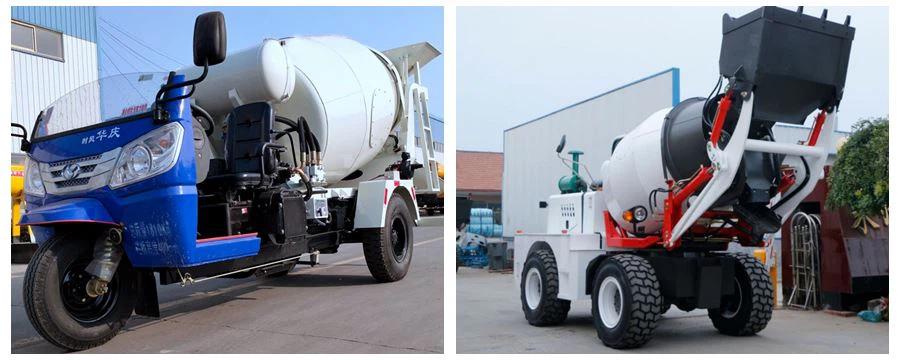
The above mixing machines are suitable for small-scale construction. They actually install a self rotating mixing drum on the vehicle chassis, and the concrete can still be mixed during driving. Therefore, it is a special vehicle with dual functions of transportation and mixing.
Advantages: the operation is very simple. It can automatically load, measure, mix and unload materials, so as to realize the integration of transportation and on-site construction. Improve efficiency and equipment utilization, reduce labor costs!
Disadvantages: the loading capacity is less than 5 cbm, which is only suitable for short distance transportation.
The following models are specially developed and produced for the transportation of concrete mix, which are very popular in the overseas market.
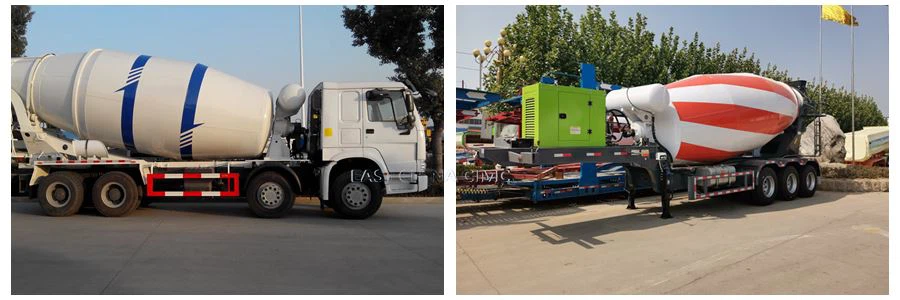
Appearance is the first step to understand a vehicle. This type of concrete mixer truck not only caters to the public visual outlook, but also adds its own characteristics in subtle aspects, which can be described as ingenuity. The dimension of the whole concrete mixer trailer is 10200 × two thousand and five hundred × 4000 (mm), total mass 31000 (kg), household tonnage 15770 (kg), wheelbase 1800 + 3050 + 13501800 + 3200 + 13501800 + 3175 + 14001800 + 3400 + 1350 (mm).
Top loading is the second step to understand a truck. The tank of this concrete mixing truck adopts 5mm alloy steel manganese steel, which has higher strength. The mixing blade adopts double spiral logarithmic thickened blade, which has stronger wear resistance. The left, right and feed inlet operating rods are flexible and convenient to operate. The water tank adopts large volume, the box body is smooth without abrupt feeling, and adopts pneumatic water supply, which can be used to clean the mixing drum in time and the car body. The three major hydraulic parts are of imported quality, first-class quality and super performance.
Finally, let's take a look at the chassis of this concrete mixer truck, which is equipped with D10 originally produced by China Heavy Truck Group Co., Ltd., China Heavy Truck Group Co., Ltd., China Heavy Truck Group Co., Ltd 34-50 D10. 38-50 D10. 28-50 D10. 31-50 engine, the emission standard meets gb17691-2005 national V and gb3847-2005, and the tire specification is 315 / 80r22 5 16PR,295/80R22. 5,12.00R20 16PR,12.00-20 16PR,11.00R20,11.00-20。
Advantages: concrete mixer trailer is suitable for engineering construction in various special environments, crowded urban areas and remote areas. It can be used in the engineering construction of some special concrete structures far away from commercial concrete mixing plants, such as concrete pavement highway maintenance, bridge and tunnel construction, township highway construction, national defense facility base construction, high-speed railway construction and maintenance.
Disadvantages: the budget is relatively little high.
Chapter 7: Considerations For Selecting a Concrete Mixer Semi Trailer
You have learned about the manufacturing process of concrete mixer Semi Trailer in this guide, which is very important for selecting a good supplier. Strict quality requirements can not only increase the service life of the trailer, but also increase the safety and economic benefits of the trailer.
In this chapter, you will learn the precautions for the correct selection of concrete mixing semi trailer. Specific courses include:
l Trailer Capacity
l Number Of Axles Of The Trailer
l Pto And Independent Drive
7.1 How To Select The Capacity Of Concrete Mixer Semi Trailer
Maybe there is a lot of confusion about choosing the capacity of concrete mixer trailer. How to choose the trailer capacity to make the business more economic, Is the largest Trailer the best choice? What benefits can a small trailer bring?
Next, we will discuss how to correctly select the correct trailer capacity, and what is the close relationship between them and economic benefits?
Effective Capacity:
We all know that the large volume trailer will bring very good economic benefits for customers' choice. At present, the largest concrete mixer semi trailer capacity is known to be 20cbm, which is almost the limit of concrete mixing Trailer.
Why 20cbm is the limit of the concrete mixing trailer's capacity? Because the concrete loaded by the mixing trailer is very heavy. Generally, they are composed of equal proportion of gravel, stone, cement and water. When the mixing trailer of 20 cbm is working, it will need very large power to drive the tank to rotate and unload. When the trailer of more than 20 cbm is working, because it does not have a high-power diesel engine,the motor and its accessories are matched, and the failure rate is relatively high.
So how to choose the volume of concrete mixer truck? First of all, the volume of concrete mixer trailer can not be simply regarded as the volume of tank body. There should be clear distinction between three concepts: geometric volume of concrete mixer trailer: the actual geometric volume in the mixing bucket, which refers to the geometric volume calculated by mathematical method in the design of mixing tank.
Mixing dynamic volume: the volume of ready mixed concrete that can be transported by the mixer truck (calculated by the volume after tamping). It can be regarded as the volume of concrete that can be unloaded by the mixer truck when it arrives at the project site. The capacity of ready mixed concrete is calculated as 2400KG / m3
Mixing volume: the concrete mixer trailer is placed in a horizontal position, and the mixing bucket can hold the largest concrete materials (including water) that have not been mixed, and can mix the amount transported to the concrete (calculated by the volume after tamping)
The relationship between the three should be: geometric volume of the mixer > mix volume > mixing volume. The volume often mentioned by users should refer to the mixing volume. Therefore, when purchasing the mixer, pay attention to distinguish the mixing volume of the vehicle.
Mixing Volume
The volume of concrete mixer trailer is divided into three concepts about the volume of concrete mixer trailer:
1. Geometric volume of concrete mixer trailer: the actual geometric volume in the mixing drum refers to the geometric volume calculated by mathematical method during the design of mixing tank.
2. Volume of concrete mixer trailer: the volume of ready mixed concrete that can be transported by the mixer truck (calculated by the volume after tamping). It can be regarded as the concrete volume that can be unloaded by the mixer truck when it arrives at the project site. The capacity of ready mixed concrete is calculated as 2400KG / m3.
3. Mixing volume: as for the horizontal position of the mixer truck, the mixing bucket can hold the largest concrete materials (including water) that have not been mixed, and the amount that can be mixed and transported to the concrete (calculated by the volume after tamping), which is the maximum capacity that the mixer truck can load the concrete material mixture (including water, water mud, sand, etc.) without material leakage
Cost Savings:
When some customers buy concrete mixer trailers, they think that the larger the volume of the mixer is, the better it is, and it is economical and efficient. Although this concept is correct in theory, in fact, the larger the volume is, the larger the tank is.
The large volume of the concrete mixer trailers not only affects the cost of purchasing the vehicle, but also affects the vehicle performance. The driving safety factor is low. The larger the tank, the higher the center of gravity, and the poor vehicle stability. Therefore, the owner friends should select the appropriate concrete mixer according to the working conditions, environment, economic benefits, performance, safety and other factors.
7.2 How To Select The Number Of Axles For a Concrete Mixer Semi Trailer
Cost saving is one of the most concerned details of every purchaser. When selecting trailers, effective cost savings can collect funds, complete more investment and obtain more returns. You may ask, how does this relate to the capacity of the trailer?
Weight of general concrete
Generally, the weight of concrete is about 2400KG / m3, and the specific volume shall be calculated according to the density of your material,
The general density of cement is 3100kg / T, fly ash 1900kg / T and sand 2800kg / T,
Water 1000kg / ton. The gas content is calculated as 0.01%, and you can calculate it according to the mix proportion. I weighed three 0.1M cubes with a total weight of 7.485kg. It is estimated that the weight of concrete without initial setting is 2.495kg/m3, and the weight of reinforced concrete is 25kn, that is, about 2551kg.
This starts with the classification of concrete. The density of heavy concrete is more than 2800 kg / m3
Ordinary concrete 2000 to 2800 kg / m3 light concrete density less than 1950 kg / m3
In general engineering, the design concrete is between 2350 and 2450, and 2400 can be taken
The weight of plain concrete is 22 ~ 24kn / m3, but it is customary to take 20 in design,
The weight of reinforced concrete is 24 ~ 25kn / m3, which is customarily taken as 25 in design
Of course, there is lightweight aggregate concrete, which is lighter
The weight of iron filings concrete is much heavier
These are stipulated in GB50009-2001 (06 Edition) load code for the design of building structures, which you can refer to
Schedule a, at a glance.
Of course, it is related to the proportion that there is an uncertain weight. For example, more stones are different from less stones. At the same time, 10kN is about 1kg, and the general concrete is 2350 ~ 2500, which is related to the strength grade of concrete. The higher the strength grade, the denser the concrete and the heavier the weight.
We have conducted relevant tests and investigations. At present, most customers choose 12, 14 and 16 cbm when purchasing mixing trailers. According to the calculation of 2.35 tons of ordinary cement, when the trailer's capacity is 16 cbm, the actual capacity of the tank is 13.6 cbm. At this time, the cement loaded in the tank is about 31.96 tons, the trailer's own weight is about 9 tons, and the overall weight is about 40.96 tons. The proportion of the designed weight of the tractor and trailer is 4 / 6. From the data, we can know that when the capacity is 16 cbm, The weight of the trailer is 24.58 tons. At this time, the trailer only needs 2 16 ton axles and 8 tires to carry and transport safely.
Of course, some countries and regions have relevant traffic regulations. Trailers with a capacity of 16 cbm and above must be transported with more than 3 axles. We must abide by the traffic regulations of each country and region.
Through the analysis in this chapter, you will find that there is a close relationship between the axle and the volume and quantity. When purchasing a trailer, you will save about 2000 dollars when saving an axle, tire and its auxiliary parts.
Through the study of this chapter, you can contact us to discuss whether you agree with our ideas.
Chapter 8: Operation And Maintenance Of Concrete Mixer Semi Trailers
With the increasing demand for commercial concrete in urban construction and large-scale project construction, the market demand for concrete mixer trailer is also increasing. Whether the concrete mixer trailer is properly used and maintained directly affects the service life of the vehicle. This paper only discusses how to maintain several assembly systems of the concrete mixer trailer.Hoping to play a role in attracting jade, exchange experience with the majority of car owners and drivers to learn and improve together.
1. Mixing Drum
If the rotating speed of the mixing drum exceeds the recommended value, it will cause premature and unnecessary wear of the mixing drum wall and mixing blades. During the mixing process when driving, when the speed of the mixing drum is adjusted by the control system, when the diesel engine reaches the maximum speed, the speed of the mixing drum shall not exceed 14rpm. There is a round nut on the roller for setting and adjusting the bearing clearance, and the roller can be adjusted in the installation position. Lift the mixing drum through the support ring to check the bearing clearance.
The wear of spiral mixing blades depends on the service time and the type of aggregate used to a certain extent, and the wear in the middle of the mixing drum is more serious. Because the upper edge of the blade will become sharp, radial cracks will form and develop into the cylinder, resulting in blade tearing. In order to prevent this situation, the sharp "blade" should be polished off in time. Weld the residual cracks in time.
An anti-wear protective strip is welded on the outer edge of the blade in the mixing drum, which can make the spiral blade more firm and prevent radial cracks from occurring too early. If the wear is intensified, the new anti-wear protective strip can be welded under the old strip, and the edge of the spiral blade does not need to be flattened. In this way, the helical blade can be ground off by about 25 mm without significantly affecting mixing and discharge.
If you want to get the maximum service life of the spiral blade, please note: when driving, select a lower mixing drum speed; Check at least once a year and carry out preventive repair from the second year of use.
2. Hydraulic System
The working pressure of the hydraulic pump is 40 ~ 45MPa. The pressure of the hydraulic system shall comply with the provisions in the operating manual of hydraulic parts and shall not be adjusted at will. The oil quality and quantity of hydraulic oil shall meet the original requirements.
During the oil change, for ordinary reducer, the oil can be changed only when the oil temperature is at the working temperature after the first oil change after 500 hours of operation. After each oil change, the sealing performance of the whole system must be checked, and all bolts, drain plugs and hose connections must be tightened again. Replace the seal with a new one if necessary.
The mounting bolts of the reducer must be checked at any time. When any part of the reducer system is removed, the interface shall be sealed immediately to prevent dust from entering. Only when the hydraulic system has no pressure (i.e. not working) can the connecting bolts be tightened
Preheating of hydraulic system. If the ambient temperature is lower than the specified minimum temperature of hydraulic oil (about 10 ℃) the hydraulic system shall be preheated. Let the engine idle for 15min when the mixing drum is not running. If the ambient temperature is - 10 ~ - 30 ℃, the following process must be followed: first let the engine idle for 15min when the mixing drum is not running. Then adjust the engine speed to about 1000rpm and the no-load mixing drum speed to 3rpm for 5 to 10min
3. Water Supply System
(1) When there is a danger of icing during operation in winter, the water of water supply system components must be drained, and all control valves shall be opened to drain the water
(2) The water tank of the water supply system must comply with the local or national regulations on pressure vessels. The pressure inspection of the pressure tank and pressure bearing system shall be carried out in accordance with the pressure vessel inspection time limit specified in the local regulations.
4. Precautions During Trailer Use
4.1 when the concrete mixer trailer is running
(1) When the concrete mixer trailer is overloaded, it must start with first gear and avoid sharp turning at high speed
(2) Avoid full throttle starting and emergency braking. Full throttle starting will cause clutch damage or uneven tire wear, and emergency braking will accelerate the wear of tires and brake friction plates
(3) It is forbidden to overload the concrete mixer trailer, which will shorten the service life of the concrete mixer trailer. During feeding and discharging, the concrete mixer trailer must be in a flat position to avoid accidents caused by excessive inclination
(4) Rotate the discharge chute to an angle perpendicular to the mixing drum and fasten it with a locking mechanism. In addition, lock the auxiliary discharge chute firmly to prevent accidents.
(5) The joystick at the rear of the concrete mixer trailer shall be at the "mixing" gear.
(6) When the ambient temperature is higher than 25 ℃, the maximum allowable time for the transport concrete mixer trailer from feeding to conveying and unloading is 60min. When the ambient temperature is lower than 25 ℃, the above time shall not exceed 90min, and the continuous operation of the mixing drum shall not be greater than 300 revolutions. When mixing, the maximum speed shall not be greater than 50km / h.
(7) When the concrete mixer trailer is running, close the air inlet control valve of the water supply system to avoid affecting the braking performance of the concrete mixer trailer.
(8) During construction in winter, check whether it is frozen before startup. If it is frozen, release it first.
When the concrete mixer trailer is moving
(1) When the concrete mixer trailer is overloaded, it must start with first gear and avoid sharp turning at high speed.
(2) Avoid full throttle starting and emergency braking. Full throttle starting will cause clutch damage or damage
(3) It is forbidden to overload the concrete mixer trailer, which will shorten the service life of the concrete mixer trailer. During feeding and discharging,
(4) Rotate the discharge chute to an angle perpendicular to the mixing drum and fasten it with a locking mechanism
(5) The joystick at the rear of the concrete mixer trailer shall be at the "mixing" gear.
(6) When the ambient temperature is higher than 25 ℃, the maximum time allowed for the transport concrete mixer trailer from feeding to conveying and unloading
60min. When the ambient temperature is lower than 25 ℃, the above time shall not exceed 90min, and the mixing drum shall
300 rpm. When mixing, the maximum speed shall not be greater than 50km / h.
(7) When the concrete mixer trailer is running, close the air inlet control valve of the water supply system to avoid affecting the braking of the concrete mixer trailer
During Concrete Mixer Semi Trailer Operation
(1) When the mixer truck arrives at the construction site, the parking road shall be flat to avoid the impact of road inclination on the incoming and outgoing materials speed and quality of concrete.
(2) Before the mixer truck starts working, the engine shall be idled and preheated. When the engine temperature is low, do not over heat
Increase the engine speed quickly, otherwise it will aggravate the wear of moving parts of the engine.
(3) During concrete mixer trailer operation, do not step on the accelerator pedal in the cab. It is strictly prohibited to slam the accelerator when loading and unloading.
(4) When mixing and feeding concrete, do not only put cement.
(5) Avoid approaching the discharge hopper and discharge chute during concrete mixer trailer transportation and operation at the destination
Do not stretch out your hand or peep into the mixing drum.
(6) If auxiliary discharge chute is used, it must be locked firmly.
(7) Do not pull the joystick too hard.
During Cleaning And Maintenance
(1) After unloading at the construction site, the inlet hopper and outlet hopper shall be washed immediately with the hose accompanying the mixer truck
The sludge and concrete adhered to the concrete mixer trailer body shall be removed at the discharge chute, etc. On the way back to the mixing plant,
150 ~ 200L water to clean the concrete residue bonded to the cylinder wall and blades.
(2) When removing and flushing the concrete at the outlet of mixing drum, feeding and discharging device, supporting wheel, etc., the operator must
Place the lever in the stop position and turn off the engine.
(3) When repairing the mixing drum, supporting roller, reducer, hydraulic pump, transmission shaft, etc., adding oil, lubricating grease and changing oil, the control lever must also be placed in the stop position and the engine must be shut down.
(4) When changing the hydraulic oil, vent the air in the system.
(5) When filling the reducer, check the oil level after several minutes.
(6) After daily work, the driver shall be responsible for injecting clean water into the mixing drum and high speed (14 ~ 18 RPM)
Rotate for 5 ~ 10min, and then drain the water to ensure that the cylinder is clean. When cleaning all parts of the mixing drum with high-pressure water, pay attention to avoid the instrument, control lever, reducer, hydraulic pump, heat exchanger and other electrical system components. The distance between the pressure water nozzle and the paint surface of the concrete mixer trailer body shall not be less than 40cm.
Concrete Cleaning
(1) The two operating handles at the tail are placed in the stop position. If it is a flexible shaft control mechanism, the cylinder turns
The throttle adjusting handle must be at the minimum position, the locking handle must be fully locked, and the engine shall be shut down.
(2) Use two U-shaped pliers to firmly fix it between the supporting wheel track and the left and right supporting wheels, and ensure the mixing drum
The U-shaped pliers shall not fall off.
3) During the removal operation, it shall be carried out symmetrically from left to right. In case of a large amount of concrete, the adhesive part shall be placed below.
★ Safety Measures:
① When the residual concrete slag inside and outside the mixing drum is removed, and the maintenance personnel enter the mixing drum for maintenance and repair welding, the engine shall be shut down first to stop the mixing drum completely. When maintenance personnel enter the mixing drum for work, they must ensure good ventilation in the mixing drum, no combustible gas and harmful dust, sufficient oxygen supply (pure oxygen shall not be used), and good insulation protection must be provided.
② Before operation in the mixing drum, cut off all main transmission parts to ensure that the mixing drum cannot rotate. When working in, on or around the drum, the mixing drum must be locked to prevent accidental rotation of the mixing drum, such as opening the cover of manhole, working in the feed / discharge area and working in the drum (cleaning and repair).
③ Precautions during welding: before welding with arc equipment, connect the ground wire directly to the welded workpiece. Always follow the manufacturer's instructions. If necessary, disconnect the electrical components and disconnect the positive and negative poles of the battery. Some chassis manufacturers use plastic pipes for compressed air and brake lines. In this case, special care should be taken when drilling or welding near these pipes.
④ The driver of concrete mixer truck must receive professional training, and those without certificate shall not work. 5 vehicle maintenance and adjustment
5.1 Daily Inspection
In order to ensure correct operation, the vehicle operation and maintenance instructions must be absolutely followed.
Please check your vehicle carefully before driving each time:
(1) Visually inspect the connection parts of hydraulic pipelines and bolts every day, and tighten or replace them if necessary.
(2) Check the hydraulic pump, hydraulic oil pipeline, oil tank, hydraulic motor and reducer for oil leakage.
(3) Check whether the water tank and water pipe leak.
(4) Check the water storage capacity of the water tank.
(5) Check the lights of work lights, side marker lights and side marker lights.
(6) Check whether the left and right control levers of the control system stay in the stop position.
(7) Check whether the fastening bolts of the reducer base are loose. If they are loose, tighten them.
(8) The handle of hydraulic pump and reducer must be set to zero position, and all lubricating parts shall be lubricated according to the lubrication chart.
5.2 Maintenance Of Class Ii Chassis
See the relevant user manual for the maintenance of chassis.
5.3 Maintenance Of Special Structure
(1) Mixing device
a. Do not use any highly corrosive cleaning agent or wash with high-pressure steam. Anticorrosive oils can be used.
b. Clean the contaminated places inside and outside the drum before and after each feeding and discharging.
c. Always visually inspect the drum and helical blades.
d. Check the wear of feed hopper, discharge hopper and discharge chute at least every 6 months.
e. Lubricate the mixing track at least every month, and use grease with strong adhesion, insoluble in water, containing graphite and molybdenum sulfide. See the list of lubricating materials for the grease.
f. Lubricate the roller with high-pressure grease through the nozzle on the roller every week. Clean the dirt around the roller regularly every day.
g. Lubricate the lubrication points of chute spring and shaft support every other week, and use high-pressure grease.
The required grease is shown in the table of lubricating materials.
h. Adjustment of band. The function of the hoop is to prevent harmful runout of the mixing drum during rotation. In the long-term use of the mixer, the gap between the raceway and the hoop is expanded due to the continuous friction between the raceway and the rubber block. In this way, the hoop loses its due role, so it must be adjusted. The adjustment method is as follows: during adjustment, adjust the connecting nut downward and adjust the gap between the hoop and the raceway to 3 ~ 4mm.
(2) Hydraulic Transmission
a. Regularly check the lubrication of universal drive shaft, and only use grade 2 lithium grease in strict accordance with the regulations.
b. Regularly check the flexibility of hydraulic pump adjusting lever and engine adjusting flexible shaft. If it is not flexible, it shall be maintained. If the fault cannot be eliminated, it shall be replaced.
c. Check the sealing performance of hydraulic pump and reducer at least every 6 months.
d. Replacement of high pressure oil pipe. High pressure oil pipes generally have strong durability and high pressure resistance, but they will also be aged and easily damaged after long-term use. Therefore, generally, the oil pipe shall be replaced after 2 ~ 3 years of use. In case of crack or local expansion at the joint, it shall be replaced in advance. When installing the oil pipe, no welding sundries or foreign objects are allowed to enter the oil pipe, and the pipe must be kept 100% clean. Clean the oil pipe and pipe joint before installing the oil pipe. In order to prevent sundries from entering the hydraulic circuit, keep the connecting hole and connecting surface as clean as possible.
e. Maintenance of reducer
a) Pay attention to oil products;
b) Oil level check:
① Check the oil level at least once a month!
② After changing the oil and replacing the oil filter, check the oil level of the reducer when the engine is stopped.
③ If the oil level drops a few minutes after refueling, please continue to add oil to reach the stable oil level (oil level observation hole) required by the instructions. ④ unscrew the nut of the refueling hole, there is a ruler at the other end of the nut, and add oil to the middle of the upper and lower marks of the ruler.
c) Oil change and oil filter replacement
① 500 operating hours for the first time!
② Replace it every 2000 hours or at least once a year! Add oil to the middle of the observation hole.
③ Note: check the pointer position of the vacuum gauge of the oil tank radiator every six months. If it exceeds the middle, remove and take out the filter to check the oil filtering. If there is too much dust and impurities, replace the filter.
d) Moderate oil quantity;
e) Important note:
① During vehicle operation, the maximum speed of the engine must be controlled within the maximum allowable speed (14 RPM) corresponding to the mixing drum. Too high speed will lead to damage and driving safety!
② Regularly use a torque wrench to check all reducer connecting bolts, which shall be within the specified tolerance range.
③ Always check the tightening of all pipeline interfaces.
④ Frequently check whether there is oil leakage of hydraulic oil pump and hydraulic motor, and maintain them in time.
⑤ Regularly check the operation of the cooling fan motor (short circuit the temperature sensor terminal) and the temperature
Operation of degree switches and relays.
⑥ Regularly check the cleanliness of the outer surface of the radiator to ensure good heat dissipation effect.
⑦ Once the reducer has to be disassembled, all pipe joints shall be blocked with clean plugs or protective covers to prevent the entry of dust.
③ When using plm-7 / plm-9 reducer, its breathable cap must be kept clean and intact.
(3) Water supply system
a. The performance reliability of the water supply system shall be checked every 6 months, and welding or other changes to the pressure vessel are not allowed.
b. The pressure regulating valve shall be cleaned and lubricated every 1500km or at least 6 months.
(4) Inspection and maintenance period
When maintaining the vehicle according to the specified maintenance items, the user shall appropriately shorten the maintenance interval according to the service conditions of the region, so as to ensure that your vehicle can be maintained more reasonably and more reliable, but the maintenance interval must not be extended.
Concrete mixer semi trailer is actually used to transport concrete or dry bulk mixed goods. The most common applications of concrete mixing trailers include construction sites, road laying, river repair and any short-distance concrete transportation. The advantages of concrete mixer semi trailer include high stability, safety, versatility and reliability of non solidification of concrete.
The number of beams, axle lines and dimensions of a trailer vary by brand. Before ordering a low bed trailer, it is important to consider the weight and size of the goods, price, maintenance cost, future business needs and loading process. The main components to check when purchasing a trailer include ramps, suspension systems, materials, tires, landing feet, axles, kingpins, braking systems and ABS.
The manufacturing buyer shall learn the manufacturing process to select the appropriate concrete mixing Trailer model. The main steps of the process include cutting and stamping steel plates, bending and correction, welding, repair welding and reinforcement. The final process includes cleaning, polishing, sandblasting, painting and installation of all components required.
The best supplier of concrete mixer semi trailer shall provide reasonable price, high quality and meet national standards. Other considerations include supplier certification, incentives and the ability to provide custom low bed trailers. The main inspections involved in the quality control process include beam, axle, fastener, surface and welding inspection. Most people associate China with inferior products. However, if you follow this guide, you can find reliable suppliers and buy high-quality concrete mixer semi trailer from C
Hot Tags: concrete mixer semi trailer guide – what is a concrete/cement mixer semi trailer?, China, manufacturers, suppliers, factory, for sale, chemicals bulk cement trailer, 40cbm 10m bulk cement tank steel trailer, lime bulk cement trailer, bulk cement trailer for pozzolan, commercial bulk cement trailer, CIMC 45cbm bulk cement silo tank trailer local rental