

Hey there! I'm a supplier of Flour Tankers, and today I wanna chat about how we handle flour that's prone to segregation. Segregation in flour can be a real pain in the neck, but we've got some solid strategies to deal with it.
First off, let's understand what segregation is. Flour segregation happens when different-sized particles in the flour separate from each other. This can occur during transportation, storage, or even loading and unloading. For instance, if you've got a mix of fine and coarse flour particles, the finer ones might settle at the bottom while the coarser ones end up on top. This can mess up the quality and consistency of the flour, which is a big no-no for bakers and other users.
One of the key ways we tackle segregation is through the design of our tankers. Our CIMC 60cbm Aluminum Flour Tank Trailer is a prime example. The tank's internal structure is carefully engineered to minimize the movement of flour particles during transit. We use baffles and partitions inside the tank to break up the flow of the flour and prevent large-scale segregation. These baffles act like barriers, reducing the chances of the finer and coarser particles separating.
Another important factor is the loading process. We make sure to load the flour in a way that promotes even distribution. Instead of just dumping the flour into the tank, we use a controlled loading system. This system allows us to evenly spread the flour throughout the tank, ensuring that the different particle sizes are well-mixed from the start. By doing this, we can significantly reduce the likelihood of segregation occurring during transportation.
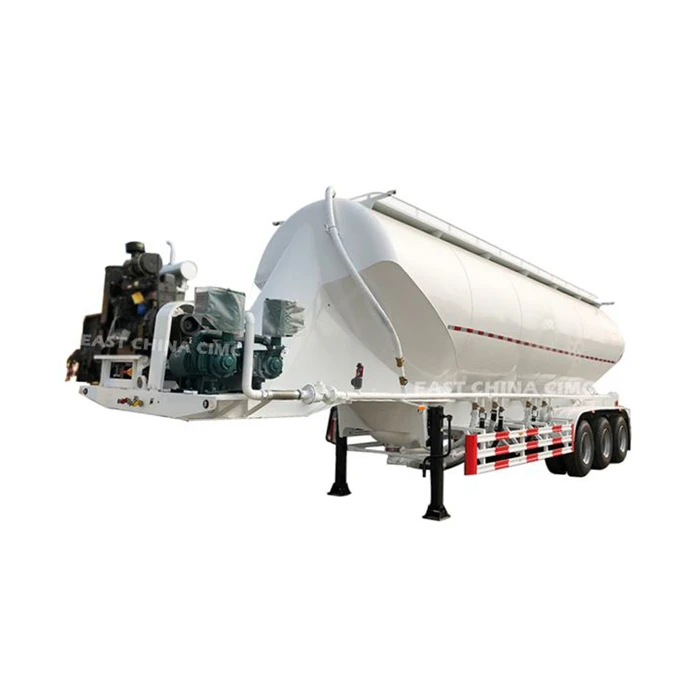

When it comes to unloading, we also have some tricks up our sleeves. Our Aluminum Flour Bulker Trailer is equipped with a pneumatic unloading system. This system uses compressed air to move the flour out of the tank. The air flow is carefully adjusted to ensure that the flour is discharged evenly. By controlling the air pressure and flow rate, we can prevent the flour from forming clumps or separating as it leaves the tank.
In addition to these mechanical solutions, we also pay close attention to the handling and storage of the flour before it gets into our tankers. We work with our suppliers to ensure that the flour is properly processed and stored. This includes making sure that the flour is milled to the right particle size distribution and that it's stored in a dry and stable environment. By starting with high-quality, well-mixed flour, we can reduce the risk of segregation right from the beginning.
We also conduct regular inspections and maintenance on our tankers. This helps us to identify and fix any issues that could contribute to segregation. For example, if a baffle is damaged or a valve is not working properly, it could affect the flow of the flour and increase the chances of segregation. By keeping our tankers in top condition, we can ensure that they continue to perform effectively in preventing segregation.
Another aspect we consider is the transportation route. We try to avoid rough roads and excessive vibrations as much as possible. Bumps and jolts during transit can cause the flour particles to move around and separate. By choosing smoother routes and driving carefully, we can minimize these vibrations and reduce the risk of segregation.
Now, let's talk about the benefits of our approach. By effectively handling flour that's prone to segregation, we can provide our customers with a more consistent product. Bakers and other food manufacturers rely on the quality and consistency of the flour to produce high-quality products. When the flour is well-mixed and free from segregation, they can be more confident in the results. This means better-tasting bread, cakes, and other baked goods.
Our Bulk Flour Tankers also offer cost savings for our customers. By reducing the amount of segregation, we can minimize waste. When flour segregates, it often means that some of the product is not usable or needs to be reprocessed. This can be expensive and time-consuming. With our tankers, our customers can get more value out of the flour they purchase.
In conclusion, handling flour that's prone to segregation is a multi-faceted challenge. But with our innovative tanker designs, careful handling processes, and attention to detail, we're able to effectively manage this issue. We're committed to providing our customers with the best possible solution for transporting and handling flour. If you're in the market for a reliable and efficient flour tanker, we'd love to hear from you. Whether you're a small bakery or a large food manufacturer, we've got the right tanker for your needs. So, don't hesitate to reach out and start a conversation about how we can help you with your flour transportation requirements.
References
- "Principles of Food Processing Engineering" by R. Paul Singh and Dennis R. Heldman
- "Flour Milling Technology" by Henry Lever
- Industry standards and guidelines for flour transportation and handling.