

Hey there! I'm a supplier of bulk cement tankers, and I've been in this industry for quite some time. One question that often comes up from our customers is, "How do you measure the remaining cement in a bulk cement tanker?" Well, let's dive right into it.
Why Measuring Remaining Cement Matters
First off, why is it so important to know how much cement is left in the tanker? For starters, it helps in efficient logistics. If you're a construction company, you need to plan your deliveries and usage accurately. Running out of cement mid - project can cause delays, which are costly. On the other hand, over - estimating and ordering too much cement can lead to waste and unnecessary expenses.
Methods of Measuring Remaining Cement
1. Weight - Based Measurement
One of the most common methods is using weight sensors. Most modern bulk cement tankers are equipped with load cells. These load cells are placed at strategic points on the tanker, usually near the axles. They measure the weight of the entire tanker, including the vehicle itself and the cement inside.
By subtracting the tare weight (the weight of the empty tanker) from the current weight, you can get the weight of the cement. This method is quite accurate, but it has its limitations. For example, the weight can be affected by factors like the amount of fuel in the tanker, any water or debris that might have accumulated, and even the uneven distribution of the cement inside the tank.
2. Level Sensors
Another popular method is using level sensors. There are different types of level sensors available.
- Ultrasonic Level Sensors: These sensors work by emitting ultrasonic waves towards the surface of the cement. The waves bounce back, and the sensor measures the time it takes for the waves to return. Based on this time, it can calculate the distance from the sensor to the cement surface. By knowing the height of the tank, you can then determine the level of the cement.
- Capacitive Level Sensors: Capacitive sensors work based on the change in capacitance. The cement has a different dielectric constant compared to air. As the level of the cement changes, the capacitance between the sensor electrodes changes. This change is then converted into a level measurement.
Level sensors are great because they can give you a real - time indication of the cement level. However, they can be affected by factors like dust accumulation on the sensor, which can interfere with the measurement.
3. Pressure - Based Measurement
Pressure - based measurement is also used in some cases. The pressure at the bottom of the tank is related to the height of the cement column above it. By measuring the pressure at the bottom of the tank, you can calculate the height of the cement.
However, this method assumes that the cement is evenly distributed and has a consistent density. In reality, the density of cement can vary depending on factors like how it was loaded and how it has settled during transportation.
Our Bulk Cement Tanker Offerings
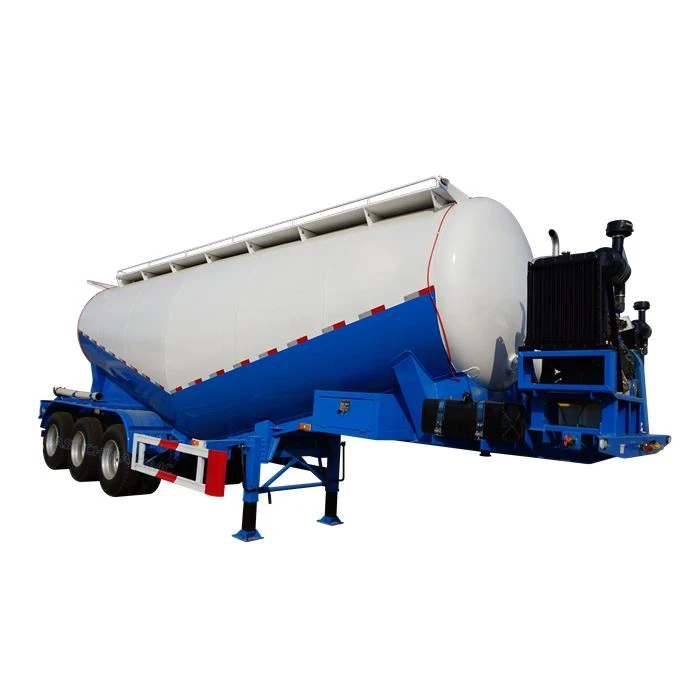
We offer a wide range of bulk cement tankers to meet different customer needs. Check out our Cement Bulker Trailer. It's designed with high - quality materials and state - of - the - art technology to ensure reliable performance.
If you need a larger capacity tanker, our 3 Axles 50tons Cement|Powder Tank Trailer is a great option. It can carry a significant amount of cement, making it ideal for large - scale construction projects.
For smaller projects, our 30tons Cement Semi Trailer is a cost - effective and efficient choice.
Challenges in Measuring Remaining Cement
Measuring the remaining cement in a bulk cement tanker isn't always a walk in the park. As I mentioned earlier, factors like uneven distribution of cement, dust, and changes in density can affect the accuracy of the measurements.

Also, different types of cement can have different properties, which can further complicate the measurement process. For example, some cements might be more prone to caking, which can make it difficult to get an accurate level or weight measurement.
Tips for Accurate Measurement
To get the most accurate measurement of the remaining cement, here are some tips:
- Regular Calibration: Whether you're using weight sensors, level sensors, or pressure sensors, regular calibration is crucial. Over time, the sensors can drift, leading to inaccurate measurements. Calibrating them at regular intervals ensures that you're getting reliable data.
- Proper Loading and Unloading: Make sure that the cement is loaded and unloaded evenly. Uneven loading can lead to an uneven distribution of the cement inside the tank, which can affect the measurement.
- Keep the Sensors Clean: If you're using level sensors, especially ultrasonic or capacitive sensors, keep them clean. Dust and debris can interfere with the sensor's operation, so regular cleaning is a must.
Conclusion
Measuring the remaining cement in a bulk cement tanker is an important aspect of the cement transportation and construction process. There are several methods available, each with its own advantages and limitations. By understanding these methods and taking the necessary precautions, you can ensure accurate measurements.
If you're in the market for a high - quality bulk cement tanker, we're here to help. Our tankers are designed to provide reliable performance and accurate measurement capabilities. Get in touch with us to discuss your specific requirements and let's work together to find the perfect solution for your cement transportation needs.
References
- "Handbook of Level Measurement" by John Doe
- "Cement Transportation and Handling" by Jane Smith