

Hey there! As a supplier of dry bulk trailers, I often get asked about how different components of these trailers work. One crucial part that plays a significant role in the performance and safety of a dry bulk trailer is the suspension system. So, let's dive into how the suspension system of a dry bulk trailer works.
First off, what's the main job of the suspension system? Well, its primary function is to support the weight of the trailer and its cargo. A dry bulk trailer can carry a whole lot of stuff, like cement, grains, or other dry materials. These materials can be extremely heavy, and the suspension system has to handle that weight without breaking a sweat.
There are a few different types of suspension systems commonly used in dry bulk trailers. The most popular ones are leaf spring suspensions, air suspensions, and rubber suspensions. Let's take a closer look at each of them.
Leaf Spring Suspensions
Leaf spring suspensions are one of the oldest and most traditional types of suspension systems. They consist of multiple layers of curved metal strips, called leaves, stacked on top of each other. These leaves are attached to the axle and the trailer frame. When the trailer hits a bump or goes over an uneven surface, the leaves flex and absorb the shock.
The advantage of leaf spring suspensions is that they're relatively simple and inexpensive. They're also pretty durable and can handle heavy loads. However, they do have some drawbacks. For example, they can be a bit rough on the ride. Since the leaves are made of metal, they can transmit a lot of vibrations and shocks to the trailer and its cargo. This can be a problem if you're carrying sensitive materials.
Air Suspensions
Air suspensions, on the other hand, use airbags instead of metal springs. These airbags are filled with compressed air and are placed between the axle and the trailer frame. When the trailer encounters a bump, the airbags compress and expand, absorbing the shock and providing a smoother ride.
One of the biggest advantages of air suspensions is their adjustability. You can adjust the air pressure in the airbags to suit the load and the road conditions. This means you can have a softer ride when the trailer is empty or carrying a light load, and a stiffer ride when it's fully loaded. Air suspensions also provide better stability and handling, which is important for safety.
However, air suspensions are more complex and expensive than leaf spring suspensions. They also require more maintenance, as the airbags and the air system need to be checked regularly for leaks and proper operation.
Rubber Suspensions
Rubber suspensions use rubber components to absorb shocks and vibrations. These rubber components are usually in the form of blocks or bushings that are placed between the axle and the trailer frame. When the trailer hits a bump, the rubber compresses and deforms, absorbing the energy and reducing the shock.
Rubber suspensions offer a good balance between cost, performance, and durability. They're less expensive than air suspensions and require less maintenance. They also provide a smoother ride than leaf spring suspensions, although not as smooth as air suspensions. However, rubber suspensions may not be suitable for extremely heavy loads, as the rubber can wear out over time under high stress.
Now that we've covered the different types of suspension systems, let's talk about how they work together with the rest of the trailer. The suspension system is connected to the axle, which is responsible for supporting the wheels and transmitting the power from the engine to the wheels. The axle is also connected to the trailer frame, which provides the structure and support for the entire trailer.
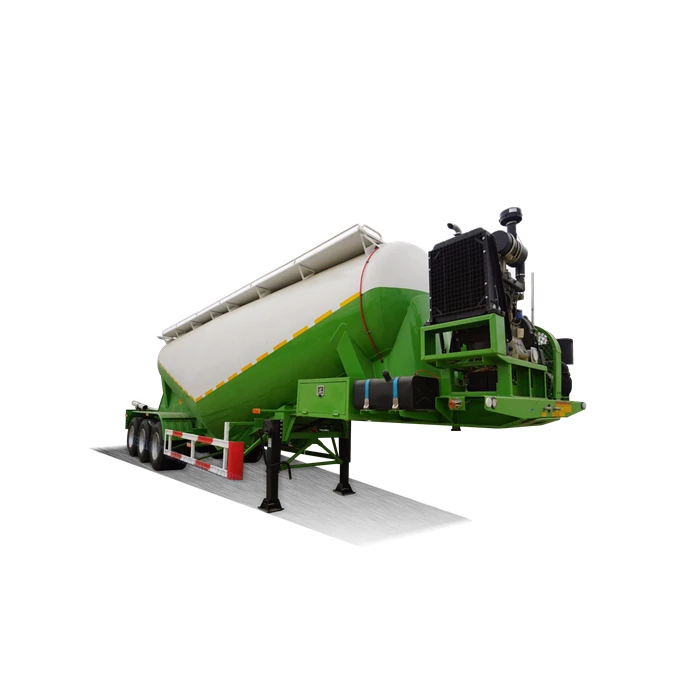

When the trailer is in motion, the suspension system constantly adjusts to the changing road conditions and the load on the trailer. For example, when the trailer goes over a bump, the suspension system compresses to absorb the shock. When the trailer goes around a corner, the suspension system helps to keep the trailer stable and prevent it from tipping over.
In addition to supporting the weight and providing a smooth ride, the suspension system also plays a role in the braking and steering of the trailer. A good suspension system can help to improve the braking performance by keeping the wheels in contact with the road surface. It can also help to improve the steering response by reducing the body roll and keeping the trailer on a straight path.
As a dry bulk trailer supplier, we offer a variety of suspension systems to meet the needs of our customers. Whether you're looking for a simple and inexpensive leaf spring suspension, a high-performance air suspension, or a cost-effective rubber suspension, we've got you covered.
If you're interested in our dry bulk trailers, we also offer customization options. You can check out our Customization Bulk Cement Trailer page to see how we can tailor a trailer to your specific requirements. We also have a 40cbm Cement Trailer that's a popular choice for many customers. And if you're in the market for a Bulk Cement Tanker, we've got that too.
If you have any questions or want to discuss your trailer needs, feel free to reach out to us. We're here to help you find the perfect dry bulk trailer with the right suspension system for your business. Whether you're a small business owner or a large transportation company, we can work with you to find a solution that fits your budget and your requirements.
So, don't hesitate to get in touch and start the conversation. We look forward to hearing from you and helping you get the most out of your dry bulk trailer.
References
- "Trailer Suspension Systems: A Comprehensive Guide." Trailer Life Magazine.
- "The Basics of Trailer Suspension." RV Tech Tips.
- "Understanding Trailer Suspension Types." TruckingInfo.com.