

Hey there! I'm a supplier of Fuel Tank Trailers, and today, I wanna chat about how to optimize the design of a fuel tank trailer. It's a topic that's super important in our industry, and I've got some insights to share based on my experience.
First off, let's talk about safety. Safety is the name of the game when it comes to fuel tank trailers. You don't wanna mess around with something that's carrying flammable stuff. One key aspect is the material of the tank. We usually go for high - quality steel or aluminum. Steel is tough and can withstand a lot of wear and tear, but it's heavier. Aluminum, on the other hand, is lighter, which can improve fuel efficiency. It also resists corrosion better in many cases. For example, if you're using the trailer in a coastal area where there's a lot of salt in the air, aluminum might be a better choice. You can check out the CIMC Fuel Tanker Trailer which uses top - notch materials to ensure safety and durability.
Another safety feature is the design of the valves and fittings. These need to be leak - proof and easy to operate. You don't want any fuel leaking out during transportation. A well - designed valve system should have multiple layers of protection. For instance, there could be a primary valve for normal operation and a secondary safety valve that kicks in if there's an over - pressure situation. Also, the fittings should be made of high - quality materials that won't corrode or break easily.
Now, let's move on to capacity. How much fuel the trailer can carry is a big deal. You wanna balance between maximizing the capacity and keeping the trailer within legal weight limits. Overloading a trailer is not only illegal but also extremely dangerous. When designing the tank, we need to consider the shape and size. A cylindrical tank is a popular choice because it distributes the pressure evenly, which is important for safety. But we also need to make sure that it fits within the overall dimensions of the trailer and can be easily loaded and unloaded. You can find a variety of Fuel Tank Trailers with different capacities on our website.
Fuel efficiency is another factor to consider. A heavy trailer will consume more fuel, so we need to look for ways to reduce the weight without sacrificing strength. As I mentioned earlier, using aluminum instead of steel can be a great way to do this. Also, the aerodynamics of the trailer play a role. A streamlined design can reduce wind resistance, which in turn saves fuel. We can add features like fairings and spoilers to the trailer to improve its aerodynamics.
Ease of maintenance is crucial. You don't want a trailer that's a pain in the neck to maintain. The design should allow easy access to all the important components, like the valves, pumps, and the tank itself. For example, there should be inspection hatches on the tank so that you can check for any signs of damage or corrosion without having to take the whole thing apart. And the parts should be easy to replace if they break down.
Let's talk about the suspension system. A good suspension system is essential for a smooth ride and to protect the tank from damage. It needs to be able to handle the weight of the fuel and the trailer itself, as well as any bumps and potholes on the road. There are different types of suspension systems available, such as leaf spring suspension and air suspension. Air suspension is generally more expensive but offers a smoother ride and better handling. It can also be adjusted to different loads, which is a big plus.
The braking system is also a critical part of the design. You need a reliable braking system that can stop the trailer safely, especially when it's fully loaded. Anti - lock braking systems (ABS) are a must - have these days. They prevent the wheels from locking up during braking, which reduces the risk of skidding. And the brakes should be easy to maintain and adjust.
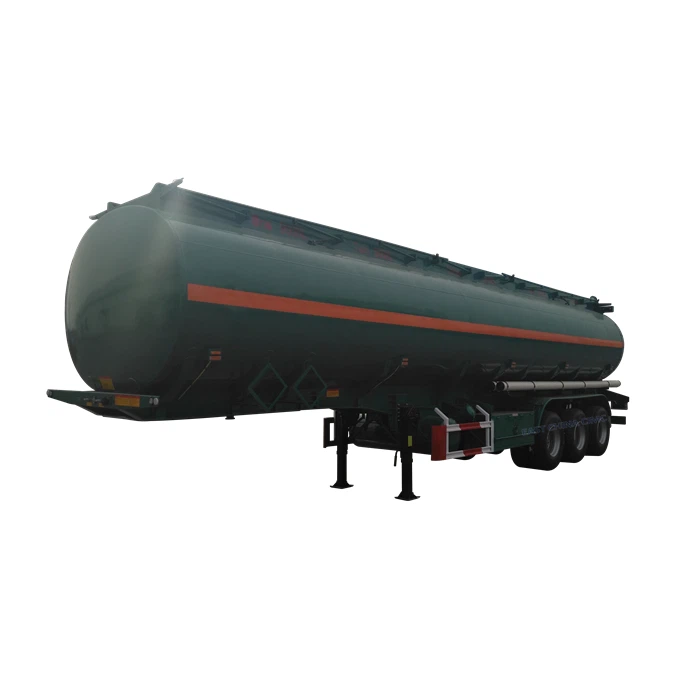

Now, if you're in the asphalt transport business, you might be interested in the Bitumen Tank Trailer Used For Asphalt Transport. This type of trailer has some special design considerations. Bitumen is a thick, sticky substance, so the tank needs to be heated to keep it in a liquid state. The heating system should be efficient and reliable. And the unloading system needs to be designed to handle the thick consistency of bitumen.
In addition to all these technical aspects, we also need to think about the aesthetics of the trailer. A well - designed and good - looking trailer can make a positive impression on customers. It can also help with brand recognition if you put your company logo and colors on it.
To sum it up, optimizing the design of a fuel tank trailer involves a lot of different factors. Safety, capacity, fuel efficiency, ease of maintenance, suspension, braking, and even aesthetics all play a role. If you're in the market for a fuel tank trailer or have any questions about optimizing the design, don't hesitate to reach out. We're here to help you find the perfect trailer that meets your needs. Whether you're a small - scale fuel distributor or a large - scale transportation company, we've got solutions for you.
So, if you're interested in learning more or making a purchase, just get in touch with us. We can have a detailed discussion about your requirements and show you the options we have available.
References
- General knowledge from the fuel tank trailer industry
- Experience in designing and manufacturing fuel tank trailers