

As a supplier of bulk cement trailers, I am often asked about the various braking systems used in these specialized vehicles. Braking systems are a critical component of any trailer, especially those designed to carry heavy loads like bulk cement. In this blog post, I will explore the different types of braking systems commonly used in bulk cement trailers, their advantages, and considerations for choosing the right one.

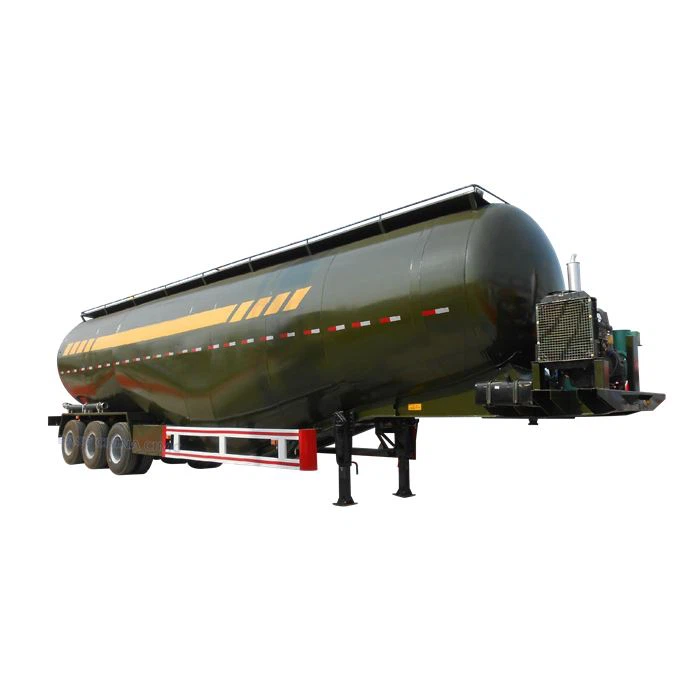
Air Braking Systems
One of the most prevalent braking systems in bulk cement trailers is the air braking system. This system uses compressed air to apply the brakes, offering several benefits for heavy - duty applications.
How Air Brakes Work
Air brakes operate on a simple yet effective principle. Compressed air is stored in reservoirs on the trailer. When the driver applies the brake pedal in the tractor, a valve opens, allowing air to flow from the reservoirs to the brake chambers. Inside the brake chambers, the air pressure pushes a diaphragm, which in turn activates the brake mechanism, typically a camshaft or a wedge, to apply the brakes on the wheels.
Advantages of Air Brakes
- Powerful Braking Force: Air brakes can generate a significant amount of force, making them well - suited for the heavy loads carried by bulk cement trailers. The ability to apply consistent and strong braking pressure ensures safe stopping even when the trailer is fully loaded.
- Reliability: Since air is readily available and the system components are relatively simple, air brakes are known for their reliability. They are less prone to overheating compared to some other braking systems, which is crucial when dealing with long - distance hauls and frequent stops.
- Ease of Maintenance: Air brake systems are relatively easy to maintain. Regular inspections of the air lines, reservoirs, and brake chambers can help identify and address potential issues before they become major problems.
Considerations
However, air brakes do have some drawbacks. They require a certain amount of time to build up air pressure, which means that the trailer may not be immediately ready to use after startup. Additionally, air brake systems are more complex than some other types, requiring proper training for maintenance and operation.
Hydraulic Braking Systems
Hydraulic braking systems are another option for bulk cement trailers, although they are less common than air brakes.
How Hydraulic Brakes Work
Hydraulic brakes use a fluid, usually brake fluid, to transfer force from the brake pedal to the brake components. When the driver presses the brake pedal, the fluid is forced through a series of hoses and cylinders. The pressure in the fluid is then used to activate the brake pads or shoes against the brake rotors or drums.
Advantages of Hydraulic Brakes
- Responsive Braking: Hydraulic brakes offer a more immediate response compared to air brakes. They can apply braking force quickly, which can be beneficial in situations where sudden stops are required.
- Compact Design: Hydraulic brake systems are generally more compact than air brake systems, which can be an advantage in trailers where space is limited.
Considerations
On the downside, hydraulic brakes may not be as suitable for extremely heavy loads as air brakes. The fluid in the system can also be prone to leaks, which can lead to a loss of braking efficiency. Additionally, hydraulic brakes may require more frequent maintenance to ensure the proper level and quality of the brake fluid.
Electric Braking Systems
Electric braking systems are becoming increasingly popular in some applications, including bulk cement trailers.
How Electric Brakes Work
Electric brakes are controlled by an electric signal from the towing vehicle. When the driver applies the brakes in the tractor, an electric current is sent to the brake magnets on the trailer wheels. The magnets then engage the brake shoes, applying the brakes.
Advantages of Electric Brakes
- Simplicity: Electric braking systems are relatively simple in design, with fewer components compared to air or hydraulic brakes. This can make them easier to install and maintain.
- Cost - Effective: Electric brakes are often more cost - effective than air or hydraulic systems, especially for smaller bulk cement trailers. They also do not require the complex infrastructure of air or hydraulic systems.
Considerations
However, electric brakes may not be as powerful as air brakes, making them less suitable for very large and heavy - duty bulk cement trailers. They also rely on the electrical system of the towing vehicle, so any issues with the electrical connection can affect the braking performance.
Anti - Lock Braking Systems (ABS)
Regardless of the primary braking system used, many modern bulk cement trailers are equipped with Anti - Lock Braking Systems (ABS).
How ABS Works
ABS is a safety feature that prevents the wheels from locking up during braking. It uses sensors to monitor the speed of each wheel. If a wheel is about to lock up, the ABS system automatically adjusts the braking pressure on that wheel, allowing the driver to maintain steering control while braking.
Benefits of ABS
- Improved Safety: ABS significantly reduces the risk of skidding and loss of control during braking, especially on slippery roads. This is crucial for bulk cement trailers, which can be more difficult to stop and maneuver due to their heavy loads.
- Shorter Stopping Distances: By preventing wheel lock - up, ABS can help reduce the overall stopping distance of the trailer, enhancing safety on the road.
Choosing the Right Braking System
When choosing a braking system for a bulk cement trailer, several factors need to be considered:
- Load Capacity: The weight of the cement that the trailer will carry is a crucial factor. Heavier loads generally require more powerful braking systems, such as air brakes.
- Usage Patterns: If the trailer will be used for short - distance hauls with frequent stops, a more responsive braking system like hydraulic or electric brakes may be suitable. For long - distance hauls, air brakes are often the preferred choice due to their reliability.
- Budget: The cost of the braking system, including installation, maintenance, and replacement parts, should also be taken into account. Electric brakes are usually the most cost - effective option, while air brakes may require a higher initial investment but offer long - term reliability.
At our company, we offer a range of bulk cement trailers equipped with different braking systems to meet the diverse needs of our customers. Whether you are looking for an Aluminum Bulk Trailer, a Concrete Mixer Trailer, or a 30tons Cement Trailer, we can help you select the right braking system for your specific requirements.
If you are in the market for a bulk cement trailer and have questions about braking systems or any other aspects of our products, we encourage you to reach out to us. Our team of experts is ready to assist you in making an informed decision and ensuring that you get a trailer that meets your needs and exceeds your expectations. Contact us today to start the procurement process and discuss your specific requirements.
References
- SAE International. (20XX). Standards for Heavy - Duty Vehicle Braking Systems.
- Trucking Industry Council. (20XX). Best Practices for Braking System Maintenance in Heavy - Duty Trailers.
- Brake Manufacturers Association. (20XX). Technical Manual on Different Types of Braking Systems.