

Flow control mechanisms for dry bulk materials in a trailer are crucial aspects that directly impact the efficiency, safety, and performance of transporting such materials. As a well - established Dry Bulk Trailer supplier, we have in - depth knowledge and rich experience in this field. In this blog, we will explore the various flow control mechanisms used in dry bulk trailers and their significance.
Gravity - Based Flow Control
One of the most basic and commonly used flow control mechanisms for dry bulk materials in a trailer is gravity. Gravity flow is a natural and cost - effective way to move dry bulk materials. When the trailer is unloaded, the outlet of the storage compartment is opened, and the dry bulk materials flow downwards due to the force of gravity.
However, relying solely on gravity has its limitations. The flow rate can be affected by factors such as the particle size and shape of the dry bulk materials, the angle of the storage compartment, and the moisture content. For example, fine - grained materials may tend to clog the outlet, especially if they have a high moisture content, which can cause the particles to stick together.
To optimize gravity - based flow, we design our trailers with appropriate hopper angles. A steeper hopper angle generally promotes better flow of dry bulk materials. Our 40cbm Cement Trailer is engineered with an optimized hopper angle to ensure efficient gravity - driven unloading of cement and other dry bulk materials.
Pneumatic Flow Control
Pneumatic flow control is another important mechanism used in dry bulk trailers. This method involves using compressed air to move the dry bulk materials. In a pneumatic system, compressed air is introduced into the trailer, creating a pressure difference that forces the materials to flow through the discharge pipes.
The advantage of pneumatic flow control is that it can handle a wide range of dry bulk materials, including fine powders and materials that are difficult to flow by gravity alone. Pneumatic systems can also provide a more controlled and consistent flow rate. For instance, in the case of transporting cement, a pneumatic system can ensure that the cement is evenly discharged without the risk of clogging.
Our Cement Bulker Trailer is equipped with a high - quality pneumatic flow control system. The system is designed to operate efficiently, minimizing the energy consumption while maximizing the unloading speed. The compressed air is carefully regulated to ensure that the flow of cement is smooth and continuous.
Mechanical Flow Control
Mechanical flow control mechanisms involve the use of mechanical devices to assist in the movement of dry bulk materials. One common example is the use of augers or screw conveyors. Augers are helical screws that rotate within a tube or trough, pushing the dry bulk materials along the axis of the screw.
Augers are particularly useful for handling materials that are sticky or have a high density. They can provide a positive displacement of the materials, ensuring a more reliable flow. In our trailers, we may incorporate augers in specific compartments or sections where gravity or pneumatic flow may not be sufficient.
Another mechanical device used for flow control is the vibrating mechanism. Vibrators can be attached to the walls of the storage compartment to help loosen the dry bulk materials and prevent them from bridging or sticking. This is especially effective for materials that tend to form arches or clumps during storage.
Importance of Flow Control in Dry Bulk Trailers
Proper flow control is essential for several reasons. Firstly, it ensures efficient unloading of dry bulk materials. Faster and more reliable unloading means that the trailers can be back on the road sooner, increasing the overall productivity of the transportation operation.
Secondly, flow control helps to prevent material waste. When the flow is not properly controlled, there may be residual materials left in the trailer after unloading, which can lead to losses. By using appropriate flow control mechanisms, we can minimize these losses and ensure that the maximum amount of material is delivered to the destination.
Thirdly, safety is a major concern. A well - designed flow control system reduces the risk of accidents during unloading. For example, a pneumatic system with proper pressure regulation can prevent over - pressurization, which could lead to pipe ruptures or other safety hazards.
Considerations for Selecting Flow Control Mechanisms
When selecting the appropriate flow control mechanism for a dry bulk trailer, several factors need to be considered. The type of dry bulk material is the primary factor. Different materials have different flow properties, such as particle size, density, and moisture content. For example, fine - powdered materials like flour may require a pneumatic or mechanical flow control system, while coarser materials like sand may be more suitable for gravity - based flow.
The capacity of the trailer is also an important consideration. Larger trailers may require more powerful flow control mechanisms to ensure efficient unloading. The intended use of the trailer, such as the frequency of unloading and the distance of transportation, also plays a role in the selection process.

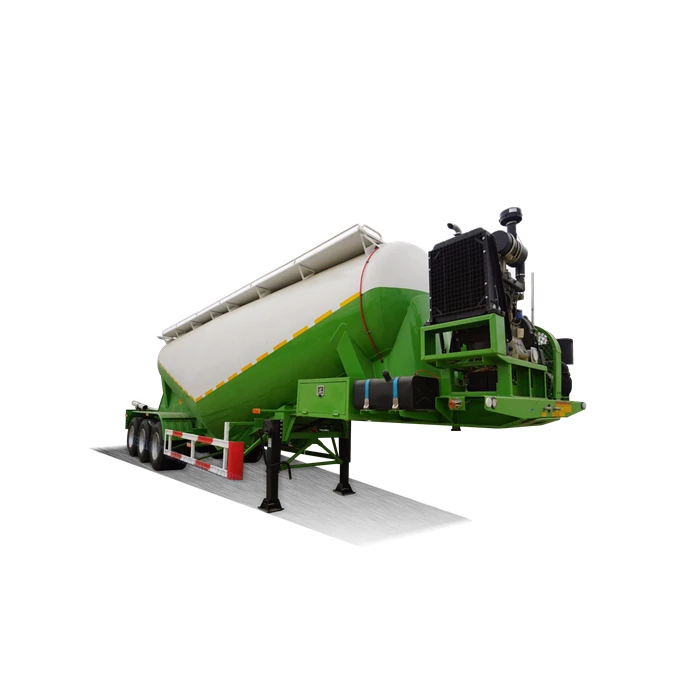
Our Expertise as a Dry Bulk Trailer Supplier
As a leading Dry Bulk Trailer supplier, we have a team of experienced engineers who are well - versed in the design and implementation of flow control mechanisms. We conduct extensive research and development to continuously improve our trailer designs and ensure that they meet the diverse needs of our customers.
We understand that each customer may have unique requirements for their dry bulk transportation. Whether it is a small - scale operation or a large - scale industrial project, we can provide customized solutions. Our EAST CHINA CIMC Concrete Mixer Tank Trailer is a prime example of our commitment to providing high - quality trailers with advanced flow control systems.
Conclusion
In conclusion, flow control mechanisms for dry bulk materials in a trailer are vital for efficient, safe, and cost - effective transportation. Gravity, pneumatic, and mechanical flow control methods each have their own advantages and are suitable for different types of dry bulk materials.
As a Dry Bulk Trailer supplier, we are dedicated to providing trailers with the best - in - class flow control systems. Our expertise and commitment to innovation allow us to offer solutions that meet the highest standards in the industry.
If you are in the market for a dry bulk trailer and need more information about our products and the flow control mechanisms we offer, we encourage you to contact us for a detailed discussion. We are ready to assist you in finding the perfect trailer for your specific needs.
References
- "Bulk Solids Handling and Storage" by Andrew W. Jenike. This book provides in - depth knowledge about the flow properties of dry bulk materials and the design of handling systems.
- "Pneumatic Conveying Design Guide" by David Mills. It offers comprehensive information on pneumatic flow control systems used in bulk material transportation.
- Industry standards and guidelines related to dry bulk trailer design and flow control mechanisms. These standards ensure the safety and performance of the trailers in real - world applications.