

As a leading supplier of skeleton trailers, we often receive inquiries about various aspects of our products, including the noise levels associated with moving skeleton trailers. Understanding these noise levels is crucial for several reasons, such as compliance with environmental regulations, ensuring the comfort of drivers and nearby residents, and maintaining a good public image. In this blog post, we will delve into the factors that contribute to the noise generated by moving skeleton trailers, the typical noise levels, and ways to mitigate excessive noise.

Factors Contributing to Noise in Moving Skeleton Trailers
Tire - Road Interaction
One of the primary sources of noise in a moving skeleton trailer is the interaction between the tires and the road surface. When the tires roll on the road, they generate a complex combination of sounds. The tread pattern of the tires plays a significant role in this. Tires with aggressive tread patterns, designed for better traction in off - road or heavy - duty applications, tend to produce more noise compared to those with smoother treads. The type of road surface also matters. Rough, uneven roads or roads with a high - friction coefficient can increase the noise level as the tires have to work harder to maintain grip.
Wind Resistance
As the skeleton trailer moves, it encounters air resistance. The shape of the trailer affects how the air flows around it. A poorly designed trailer may cause turbulent air flow, which in turn generates noise. The presence of exposed structural elements on the skeleton trailer can disrupt the smooth flow of air, creating vortices and whistling sounds. Additionally, the speed of the trailer is directly related to wind - induced noise. As the speed increases, the force of the wind against the trailer also increases, leading to higher noise levels.

Mechanical Components
The mechanical components of the skeleton trailer can also be a source of noise. The axles, bearings, and suspension systems can produce noise if they are not properly maintained or if they are worn out. For example, loose or damaged bearings can cause a grinding or rattling noise. The braking system is another area where noise can originate. Squealing brakes are a common problem, which can be caused by factors such as worn brake pads, contaminated brake surfaces, or improper adjustment.
Cargo Movement
If the cargo on the skeleton trailer is not properly secured, it can move around during transit, creating noise. For instance, if the containers on a 40ft Container Chassis Trailer are not firmly locked in place, they may shift and bang against the trailer structure, producing loud noises. This is especially true when the trailer is going over bumps or making turns.
Typical Noise Levels of Moving Skeleton Trailers
The noise levels of moving skeleton trailers can vary depending on the factors mentioned above. On average, a moving skeleton trailer traveling at a moderate speed (around 50 - 60 km/h) on a smooth road can produce noise levels in the range of 70 - 80 decibels (dB). However, in certain situations, the noise levels can be significantly higher.
For example, when the trailer is accelerating, climbing a steep hill, or traveling on a rough road, the noise levels can reach up to 90 dB or more. In urban areas, where noise regulations are more stringent, these high noise levels can be a cause for concern. Prolonged exposure to noise levels above 85 dB can also have negative effects on the hearing of the driver and nearby residents.
Measuring Noise Levels
To accurately measure the noise levels of a moving skeleton trailer, specialized equipment is required. Sound level meters are commonly used to measure the intensity of sound in decibels. These meters are calibrated to measure the sound pressure level at a specific location. When measuring the noise of a moving trailer, the sound level meter is usually placed at a fixed distance from the trailer, typically 7.5 meters from the center of the lane and 1.2 meters above the ground.
It is important to note that the noise levels can vary depending on the direction of the trailer's movement and the position of the sound level meter. Multiple measurements may need to be taken from different angles and distances to get a comprehensive understanding of the trailer's noise profile.
Mitigating Noise Levels
Tire Selection
Choosing the right tires can significantly reduce the noise generated by the trailer. Low - noise tires are designed with special tread patterns and rubber compounds to minimize the sound produced during tire - road interaction. These tires are often more expensive than standard tires, but the reduction in noise can be well worth the investment, especially for trailers that operate in noise - sensitive areas.
Aerodynamic Design
Improving the aerodynamic design of the skeleton trailer can help reduce wind - induced noise. This can be achieved by adding fairings, spoilers, or other aerodynamic devices to the trailer. These components help to smooth the air flow around the trailer, reducing turbulence and the associated noise. For example, a Linked Skeletal Container Chassis Trailer with an aerodynamic design may produce less noise compared to a traditional design.
Maintenance
Regular maintenance of the mechanical components of the trailer is essential for noise reduction. This includes lubricating the axles, bearings, and suspension systems, and checking and adjusting the brakes. Worn - out parts should be replaced promptly to prevent excessive noise. For example, replacing worn brake pads can eliminate the squealing noise associated with the braking system.
Cargo Securement
Properly securing the cargo on the trailer is crucial for reducing noise. This can be done by using appropriate locking mechanisms and restraints. For a 20FT/40FT Skeleton Semi Trailer, ensuring that the containers are tightly locked in place can prevent them from shifting and creating noise during transit.
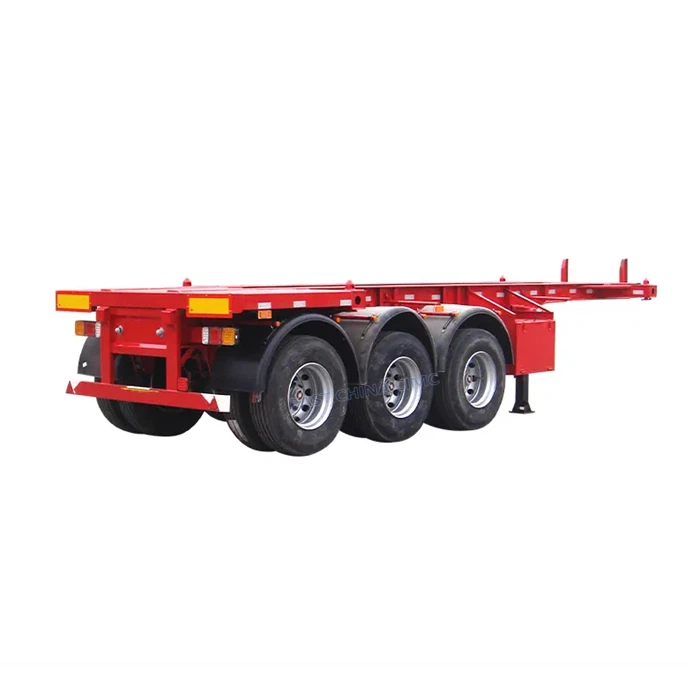
Importance of Managing Noise Levels
Environmental Regulations
Many countries and regions have strict environmental regulations regarding noise pollution. Skeleton trailer operators need to ensure that their trailers comply with these regulations to avoid fines and legal issues. By managing the noise levels of their trailers, operators can demonstrate their commitment to environmental protection.
Driver Comfort
Excessive noise can be a major source of discomfort for drivers. Prolonged exposure to high - level noise can lead to fatigue, stress, and even hearing loss. By reducing the noise levels inside the trailer, drivers can have a more comfortable and safer driving experience.
Public Relations
In today's society, companies are increasingly being held accountable for their impact on the environment and the community. A noisy skeleton trailer can be a nuisance to nearby residents, which can damage the company's public image. By taking steps to reduce noise levels, companies can improve their public relations and build a positive reputation.
Conclusion
In conclusion, the noise levels associated with a moving skeleton trailer are influenced by several factors, including tire - road interaction, wind resistance, mechanical components, and cargo movement. Typical noise levels can range from 70 - 80 dB at moderate speeds, but can be much higher in certain situations. Measuring and managing these noise levels is important for compliance with regulations, driver comfort, and public relations.
As a supplier of high - quality skeleton trailers, we are committed to providing our customers with trailers that are not only durable and reliable but also designed to minimize noise. We offer a range of options, such as low - noise tires and aerodynamic designs, to help our customers meet their noise reduction needs.
If you are interested in learning more about our skeleton trailers or have any questions regarding noise levels, please feel free to contact us for a detailed discussion. We look forward to working with you to find the best trailer solutions for your business.
References
- "Tire Noise: Causes and Solutions", Tire Technology International Journal.
- "Aerodynamics of Commercial Vehicles: Reducing Noise and Improving Efficiency", Society of Automotive Engineers (SAE) Research Report.
- "Noise Regulations for Commercial Vehicles in Europe", European Union Environmental Agency Publication.