

Hey there! As a supplier of skeleton trailers, I often get asked about the tire requirements for these trailers. It's a crucial topic because the right tires can significantly impact the performance, safety, and longevity of your skeleton trailer. So, let's dive right in and explore what you need to know.
Load Capacity
First and foremost, load capacity is a key factor when it comes to choosing the right tires for your skeleton trailer. Skeleton trailers are designed to carry shipping containers, which can vary greatly in weight depending on their size and the goods inside. You need to ensure that the tires you select can handle the maximum load your trailer is designed to carry.
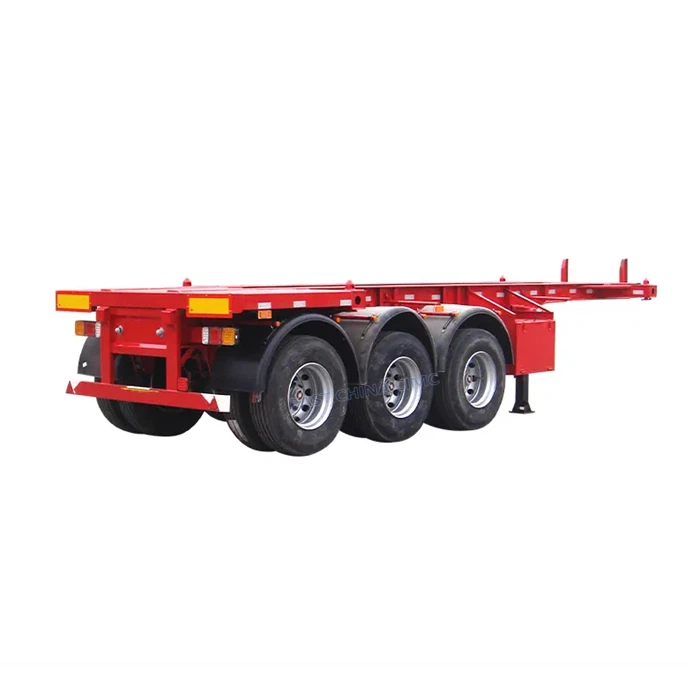
For instance, if you're dealing with a 20FT/40FT Skeleton Semi Trailer, you'll need tires that can support the weight of a fully loaded 20 - foot or 40 - foot container. A 20 - foot container can weigh up to around 24,000 kg when fully loaded, while a 40 - foot container can go up to about 30,000 kg. So, you've got to pick tires with a high load - rating. Look for the load index on the tire sidewall. This number corresponds to the maximum weight the tire can carry at a specified inflation pressure. The higher the load index, the more weight the tire can handle.

Tire Size
The size of the tires is another important consideration. Skeleton trailers usually require larger tires to support the heavy loads and provide stability on the road. The tire size is typically indicated on the sidewall in a format like "295/80R22.5". Here, 295 is the width of the tire in millimeters, 80 is the aspect ratio (which is the height of the tire sidewall as a percentage of the width), and 22.5 is the diameter of the wheel in inches.
The correct tire size is essential for proper fitment on the trailer's wheels. Using the wrong size can lead to issues like poor handling, uneven tire wear, and even safety hazards. Make sure to check your trailer's manual or consult with a tire professional to determine the appropriate tire size for your specific skeleton trailer model.
Tread Pattern
The tread pattern of the tires plays a vital role in the trailer's performance, especially in different weather conditions. For skeleton trailers, a tread pattern that offers good traction and stability is crucial.
In wet conditions, tires with deep grooves and channels are better at dispersing water, reducing the risk of hydroplaning. This is important because when hydroplaning occurs, the tires lose contact with the road surface, which can lead to a loss of control. A tread pattern with a lot of sipes (small cuts in the tread blocks) can also improve traction on wet roads by providing more biting edges.
On dry roads, a tread pattern that provides good grip and low rolling resistance is ideal. Low rolling resistance means the tires require less energy to move, which can result in better fuel efficiency. Some tires are designed with a special tread compound that offers a balance between good traction and low rolling resistance.
Durability and Resistance
Skeleton trailers often travel long distances, sometimes on rough roads. So, the tires need to be durable and resistant to various types of damage.
Resistance to cuts and punctures is important, especially if your trailer will be traveling on roads with debris or sharp objects. Tires with a thick sidewall and a tough tread compound are more likely to withstand these challenges. Some tires also have special features like reinforced belts to provide extra protection against impacts.
In addition, the tires should be resistant to heat build - up. When a trailer is carrying a heavy load, the tires generate a lot of heat, especially during long - distance trips. Heat can cause the tire rubber to break down over time, leading to premature wear and potential tire failure. Look for tires that are designed to dissipate heat effectively.
Inflation Pressure
Maintaining the correct inflation pressure is crucial for the performance and safety of your skeleton trailer tires. Under - inflated tires can lead to increased rolling resistance, which means higher fuel consumption. They also wear out more quickly, especially on the outer edges of the tread. Over - inflated tires, on the other hand, can have a reduced contact area with the road, which can affect traction and handling.
You should check the tire pressure regularly, at least once a week or before each long trip. The recommended inflation pressure can usually be found in the trailer's manual or on a sticker located on the trailer itself. Use a reliable tire pressure gauge to ensure accurate readings.
Compatibility with Trailer Type
Different types of skeleton trailers may have specific tire requirements. For example, an American Shipping Container Chassis may have different load - distribution characteristics compared to a Skeletal Trailer. You need to make sure that the tires you choose are compatible with the design and specifications of your particular trailer.
Some trailers may have a single - axle or tandem - axle configuration. Tandem - axle trailers distribute the load over two axles, which can affect the tire load and wear patterns. You may need to adjust your tire selection and maintenance accordingly.
Cost - Effectiveness
While it's important to choose high - quality tires that meet all the requirements, cost - effectiveness is also a consideration. You don't want to overspend on tires, but at the same time, you can't compromise on quality.
Look for tires that offer a good balance between price and performance. Some well - known tire brands may be more expensive, but they often come with a reputation for reliability and long - lasting performance. On the other hand, there are also some budget - friendly options that can still meet your basic needs. Consider factors like the expected lifespan of the tires, the warranty offered, and the cost of replacement when making your decision.
Maintenance and Inspection
Proper maintenance and regular inspection of your skeleton trailer tires are essential to ensure their optimal performance and safety. In addition to checking the tire pressure regularly, you should also inspect the tires for signs of wear, damage, and uneven tread wear.
Look for things like cracks, bulges, or cuts in the sidewall. If you notice any of these issues, it's important to replace the tire as soon as possible. Uneven tread wear can indicate problems with the trailer's alignment, suspension, or tire inflation. You may need to have the trailer checked by a professional if you notice significant uneven wear.
Also, make sure to rotate the tires regularly. This helps to ensure even wear across all the tires and extends their overall lifespan. The recommended tire rotation pattern can usually be found in the trailer's manual.
Conclusion
In conclusion, choosing the right tires for your skeleton trailer is a multi - faceted decision. You need to consider factors like load capacity, tire size, tread pattern, durability, inflation pressure, compatibility with the trailer type, and cost - effectiveness. By paying attention to these aspects and following proper maintenance procedures, you can ensure that your skeleton trailer performs safely and efficiently on the road.
If you're in the market for a skeleton trailer or need advice on the right tire requirements for your existing trailer, don't hesitate to reach out. We're here to help you make the best choices for your transportation needs. Whether you're looking for an American Shipping Container Chassis, a Skeletal Trailer, or a 20FT/40FT Skeleton Semi Trailer, we've got the expertise to assist you. Contact us today to start the conversation about your trailer and tire needs.
References
- Tire manufacturers' technical guides
- Trailer manufacturers' manuals
- Industry standards and regulations on trailer tires