

When it comes to the world of flatbed trailers, one of the most frequently asked questions is about the average fuel consumption when towing a flatbed trailer. As a seasoned flatbed trailer supplier, I've encountered this query countless times from customers, and I'm here to shed some light on this crucial topic.
Understanding the Basics of Fuel Consumption When Towing
Fuel consumption when towing a flatbed trailer is a complex interplay of several factors. Unlike driving a vehicle without a trailer, towing adds significant weight and aerodynamic drag, both of which can substantially increase the amount of fuel needed to move the vehicle forward.
Let's start with weight. The heavier the load on the flatbed trailer, the more power the towing vehicle needs to generate to accelerate and maintain speed. This increased power demand directly translates to higher fuel consumption. For instance, a light - duty flatbed trailer carrying a small load of construction materials will consume less fuel compared to a heavy - duty trailer hauling large industrial equipment.
Aerodynamics also plays a vital role. A flatbed trailer presents a large, flat surface area to the oncoming air, creating a significant amount of drag. The faster the vehicle is traveling, the greater the drag force, and thus, the more fuel is required to overcome it. This is why fuel efficiency often drops significantly at high speeds when towing a trailer.
Factors Affecting Fuel Consumption
Trailer Design
The design of the flatbed trailer itself can have a substantial impact on fuel consumption. For example, a well - designed Chassis Flatbed Trailer may have features that reduce aerodynamic drag. Some trailers are built with rounded edges or streamlined shapes to minimize the air resistance they create. Additionally, the type of materials used in the trailer's construction can affect its weight. Lighter materials can lead to lower overall weight, which in turn can reduce fuel consumption.
Towing Vehicle
The choice of the towing vehicle is another critical factor. Different vehicles have different engine sizes, power outputs, and fuel efficiencies. A larger, more powerful truck may be able to tow heavier loads, but it will generally consume more fuel than a smaller vehicle. However, a vehicle that is too small for the load may also end up consuming more fuel as it has to work harder to tow the trailer.
Driving Conditions
Driving conditions such as road type, traffic, and weather can also influence fuel consumption. Driving on hilly terrain requires more energy to climb the hills and may result in increased fuel usage. Stop - and - go traffic in the city can also be less fuel - efficient compared to steady - state driving on the highway. Windy conditions can add to the aerodynamic drag, further increasing fuel consumption.
Calculating Average Fuel Consumption
Calculating the average fuel consumption when towing a flatbed trailer is not an exact science, as it depends on so many variables. However, a general way to estimate it is by measuring the amount of fuel used over a specific distance.
First, fill up the fuel tank of the towing vehicle before starting a trip. Then, note down the odometer reading. After traveling a certain distance, fill up the tank again and record the amount of fuel added. Divide the amount of fuel used by the distance traveled to get the fuel consumption rate (e.g., liters per kilometer or gallons per mile).
It's important to note that this calculation will give you an average for that particular trip, and the results may vary depending on the factors mentioned above.
Examples of Fuel Consumption in Different Scenarios
Let's take a look at some examples to better understand how fuel consumption can vary. Suppose we have a medium - sized pickup truck towing a Container Transport Flatbed Trailer with a light load on a flat highway at a steady speed of 60 miles per hour. In this scenario, the fuel consumption might be around 10 - 15% higher than when the truck is driving without the trailer.
On the other hand, if the same truck is towing a heavy - duty 40ft Container Truck on a hilly road with stop - and - go traffic, the fuel consumption could increase by 30 - 50% or even more.
Tips to Improve Fuel Efficiency When Towing
Proper Loading
Make sure the load on the flatbed trailer is evenly distributed. An uneven load can cause the vehicle to handle poorly and increase fuel consumption. Also, try to keep the load as light as possible without sacrificing the necessary equipment or materials.
Speed Management
Maintaining a moderate speed is crucial for fuel efficiency. As mentioned earlier, higher speeds increase aerodynamic drag. Try to stay within the speed limits and avoid rapid acceleration and deceleration.
Vehicle Maintenance
Regular maintenance of the towing vehicle is essential. Keep the tires properly inflated, change the oil and air filters on schedule, and ensure that the engine is in good working condition. A well - maintained vehicle will operate more efficiently and consume less fuel.
The Importance of Fuel Efficiency for Flatbed Trailer Users
For businesses that rely on flatbed trailers for transportation, fuel costs can be a significant expense. Improving fuel efficiency can lead to substantial cost savings over time. Additionally, in an era where environmental concerns are becoming increasingly important, reducing fuel consumption also means reducing carbon emissions.
As a flatbed trailer supplier, we understand the importance of providing trailers that are not only durable and reliable but also fuel - efficient. Our range of trailers is designed with the latest technologies and materials to minimize the impact on fuel consumption while still delivering high - performance hauling capabilities.

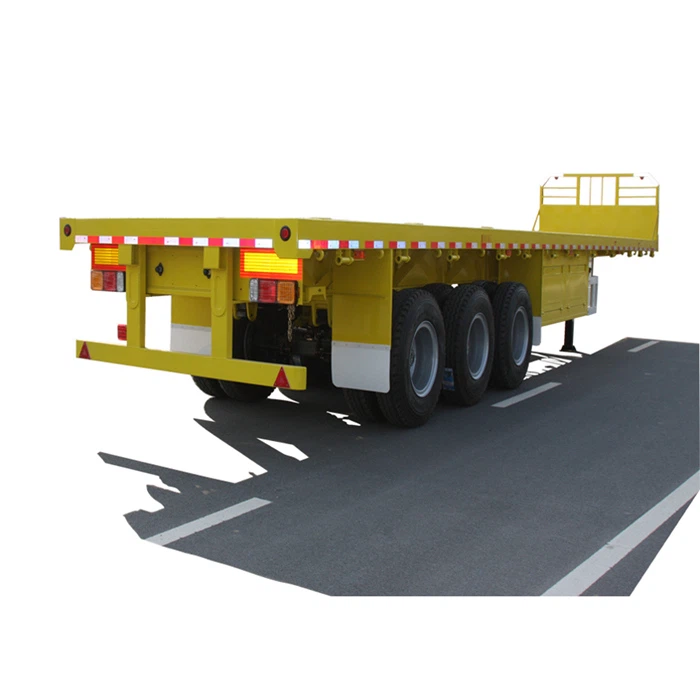
Contact Us for Your Flatbed Trailer Needs
If you're in the market for a flatbed trailer, whether it's a Chassis Flatbed Trailer, Container Transport Flatbed Trailer, or a 40ft Container Truck, we're here to help. Our team of experts can provide you with detailed information about our products, including their fuel - efficiency features. Contact us today to discuss your specific requirements and start a procurement negotiation. We look forward to working with you to find the perfect flatbed trailer solution for your business.
References
- SAE International - Various technical papers on vehicle aerodynamics and fuel efficiency
- Department of Energy - Research on fuel consumption and driving conditions
- Automotive Engineering textbooks - Information on engine performance and vehicle dynamics