

Hey there! As a flatbed trailer supplier, I often get asked about the height of a standard flatbed trailer. It's a common question, and for good reason. The height of a flatbed trailer can impact everything from load capacity to transportation regulations. So, let's dive into this topic and clear up any confusion.

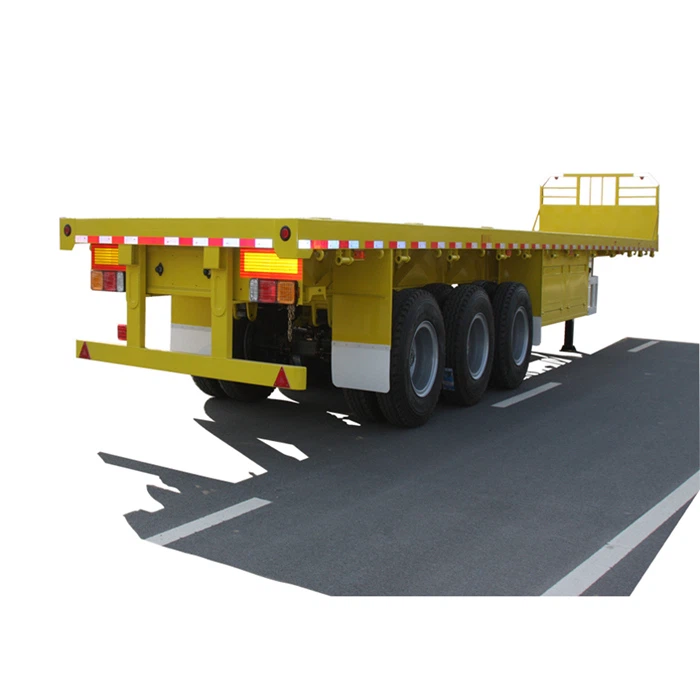
First off, there isn't a one - size - fits - all answer when it comes to the height of a standard flatbed trailer. The height can vary depending on a few factors, such as the type of trailer, its intended use, and regional regulations.
Types of Flatbed Trailers and Their Heights
Lowboy Flatbed Trailers
Lowboy flatbed trailers are designed to carry heavy and oversized loads, like construction equipment. These trailers have a lower deck height compared to other types. Typically, the deck height of a lowboy flatbed trailer can range from about 18 inches (45.72 cm) to 24 inches (60.96 cm). The reason for this low height is to keep the center of gravity of the load low, which enhances stability during transportation. This is crucial when hauling large and heavy machinery that could easily tip over if the trailer is too high.
Standard Flatbed Trailers
Standard flatbed trailers are more commonly used for general freight hauling. The deck height of a standard flatbed trailer usually falls between 48 inches (121.92 cm) and 54 inches (137.16 cm). This height allows for a good balance between load capacity and ease of loading and unloading. With this height, forklifts and other loading equipment can easily access the trailer bed.
Drop - Deck Flatbed Trailers
Drop - deck flatbed trailers, also known as step - deck trailers, have a unique design. They have a lower deck in the middle section, which allows for taller loads to be transported while still remaining within height regulations. The front part of the trailer, near the gooseneck, is higher, usually around 48 inches (121.92 cm), while the lower deck can be as low as 36 inches (91.44 cm). This design gives drop - deck trailers an advantage when it comes to hauling tall items like industrial machinery or large pipes.
Factors Affecting Flatbed Trailer Height
Axle Configuration
The number and arrangement of axles on a flatbed trailer can influence its height. Trailers with more axles may have a slightly higher deck height to accommodate the additional suspension and axle components. For example, a multi - axle flatbed trailer designed for extremely heavy loads will need a stronger and more complex suspension system, which can add to the overall height of the trailer.
Suspension System
The type of suspension system used on a flatbed trailer also plays a role in determining its height. Air suspension systems are becoming increasingly popular because they offer a smoother ride and can be adjusted to different heights. Some air - suspended flatbed trailers can be raised or lowered by several inches, depending on the load and road conditions. On the other hand, leaf - spring suspension systems are more traditional and generally have a fixed height.
Regional Regulations
Height regulations vary from one region to another. In the United States, the maximum legal height for a commercial vehicle, including the trailer and its load, is typically 13 feet 6 inches (4.11 meters). However, some states may have different regulations, and there are also exceptions for certain types of loads. In Europe, the maximum height limit for trucks and trailers is usually around 4 meters (13.12 feet). As a flatbed trailer supplier, we need to make sure that our trailers comply with these regulations to avoid any legal issues for our customers.
Importance of Knowing the Trailer Height
Load Planning
Understanding the height of a flatbed trailer is essential for proper load planning. If you're shipping tall items, you need to choose a trailer with a low enough deck height to stay within the legal height limit. For instance, if you're transporting a piece of equipment that is 10 feet (3.05 meters) tall, a standard flatbed trailer with a 54 - inch (137.16 cm) deck height may not be suitable. You might need to opt for a drop - deck or lowboy trailer instead.
Bridge and Tunnel Clearance
When transporting goods on flatbed trailers, you also need to consider bridge and tunnel clearance. Low - lying bridges and tunnels can pose a problem if the trailer and its load are too tall. By knowing the exact height of your trailer, you can plan your route accordingly and avoid any potential collisions or delays.
Our Flatbed Trailer Offerings
As a flatbed trailer supplier, we offer a wide range of trailers to meet different customer needs. Whether you need a Container Flatbed Truck Trailer for shipping containers, a Container Transport Flatbed Trailer for long - distance container hauling, or a Flatbed Container Trailer for versatile container transportation, we've got you covered.
Our trailers are built to the highest quality standards, with attention to detail in every aspect, including the height. We make sure that our trailers are not only compliant with all relevant regulations but also offer the best performance and durability.
If you're in the market for a flatbed trailer, we'd love to have a chat with you. Whether you have questions about trailer height, load capacity, or any other aspect of flatbed trailers, our team of experts is here to help. We can work with you to find the perfect trailer for your specific requirements. So, don't hesitate to reach out and start the conversation about your flatbed trailer needs.
References
- Federal Motor Carrier Safety Administration (FMCSA) regulations on vehicle dimensions.
- European Union regulations on road vehicle dimensions.
- Industry manuals on flatbed trailer design and construction.