

When it comes to the transportation industry, flatbed trailers play a crucial role in moving a wide range of goods, from construction materials to heavy machinery. As a flatbed trailer supplier, I often get asked about the length of a common flatbed trailer. In this blog post, I'll delve into the typical lengths of flatbed trailers, factors that influence these lengths, and how different lengths serve various transportation needs.
Typical Lengths of Common Flatbed Trailers
The length of a flatbed trailer can vary significantly based on its intended use, regional regulations, and the type of cargo it is designed to carry. In general, the most common lengths for flatbed trailers in North America range from 48 feet to 53 feet.

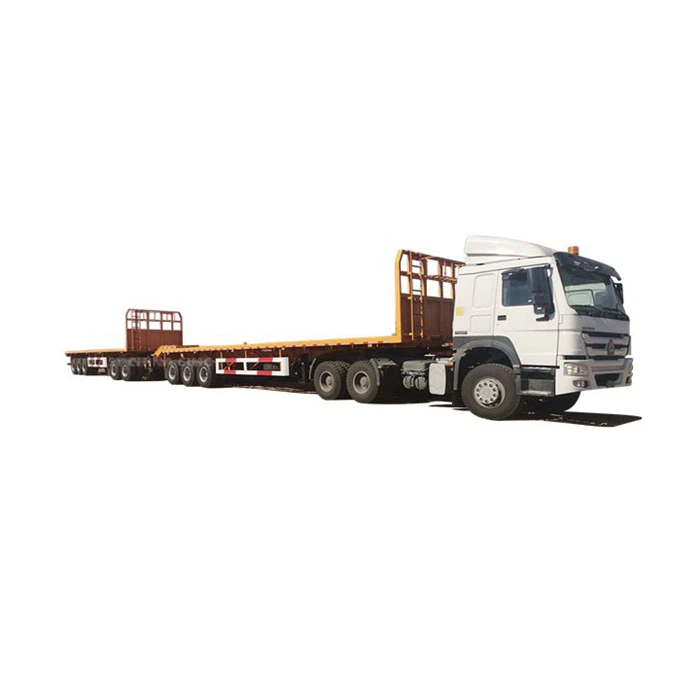
A 48 - foot flatbed trailer is a popular choice for many haulers. It offers a good balance between maneuverability and cargo - carrying capacity. This length is suitable for transporting a variety of goods, such as lumber, steel pipes, and pre - fabricated building components. The 48 - foot trailer can navigate through most urban and suburban areas with relative ease, making it a versatile option for both local and regional hauls.
On the other hand, the 53 - foot flatbed trailer provides increased cargo space. It is often used for long - haul transportation and is capable of carrying larger and heavier loads. This extra length allows for more efficient shipping of bulkier items, reducing the number of trips required to transport a given volume of goods. However, due to its longer size, it may face more restrictions in terms of where it can operate, especially in areas with narrow roads or tight turns.
In Europe, the standard lengths of flatbed trailers also vary. Common lengths include 13.6 meters (approximately 44.6 feet) and 16.5 meters (about 54.1 feet). The 13.6 - meter trailer is widely used for general freight transportation within the EU, while the 16.5 - meter trailer is more suitable for specialized and long - distance haulage.
Factors Influencing Flatbed Trailer Length
Regulatory Requirements
One of the most significant factors influencing the length of a flatbed trailer is government regulations. Different countries and regions have specific laws regarding the maximum allowable length of trailers on public roads. These regulations are in place to ensure road safety and to prevent over - sized vehicles from causing traffic congestion or damage to infrastructure.
For example, in the United States, the Federal Bridge Formula limits the weight and length of commercial vehicles based on the number of axles and the distance between them. States may also have their own additional regulations that can further restrict trailer lengths. In some states, special permits may be required to operate trailers that exceed the standard lengths.
Cargo Requirements
The type and size of the cargo being transported also play a major role in determining the appropriate trailer length. If you are hauling long items such as steel beams or large pipes, you will need a trailer with sufficient length to accommodate these items safely. In some cases, custom - length trailers may be built to meet the specific needs of a particular cargo.
For instance, when transporting wind turbine blades, which can be extremely long, specialized flatbed trailers with extended lengths are used. These trailers are designed to handle the unique dimensions and weight distribution of the blades, ensuring a secure and efficient transport.
Maneuverability
The need for maneuverability is another important consideration. Shorter trailers are generally more maneuverable, making them ideal for operations in areas with limited space, such as construction sites or urban delivery routes. They can make tighter turns and navigate through narrow streets more easily than longer trailers.
However, if the primary goal is to maximize cargo capacity and the routes are mostly on highways or open roads, a longer trailer may be a better choice, despite its reduced maneuverability.
Different Types of Flatbed Trailers and Their Lengths
Extendable Flatbed Trailer
An Extendable Flatbed Trailer is a versatile option that offers the flexibility to adjust its length according to the cargo requirements. These trailers can be extended to accommodate longer loads and retracted for easier maneuverability and storage. The base length of an extendable flatbed trailer is typically around 48 feet, but it can be extended to lengths of up to 80 feet or more, depending on the design. This makes them suitable for transporting a wide range of long and oversized cargo, such as industrial equipment and large - scale construction materials.
EAST CHINA CIMC Mongolia Connectable|Super - Link Container Flatbed Trailer
The EAST CHINA CIMC Mongolia Connectable|Super - Link Container Flatbed Trailer is designed for specific transportation needs, especially in the context of container shipping and cross - border operations. These trailers often come in standard lengths, such as 40 feet or 45 feet, which are compatible with most standard shipping containers. The connectable feature allows multiple trailers to be linked together, increasing the overall cargo - carrying capacity while still maintaining a certain level of flexibility in terms of operation.
Container Flatbed Semi Trailer
Container Flatbed Semi Trailers are commonly used for transporting shipping containers. They typically come in lengths of 20 feet, 40 feet, and 45 feet, which correspond to the standard sizes of shipping containers. These trailers are designed to securely hold the containers during transit, with features such as locking mechanisms and tie - down points. The 20 - foot trailers are suitable for smaller shipments or when a more flexible container size is required, while the 40 - foot and 45 - foot trailers are used for larger volume shipments.
Choosing the Right Flatbed Trailer Length for Your Business
When selecting a flatbed trailer for your transportation business, it is essential to carefully consider your specific needs. First, analyze the types of cargo you will be transporting on a regular basis. If you primarily deal with short - to medium - length items, a 48 - foot trailer may be sufficient. However, if you expect to handle larger and longer loads, a 53 - foot or an extendable trailer might be a better investment.
Next, take into account the routes your trailers will be traveling. If you operate mainly in urban areas or areas with tight spaces, shorter trailers will provide better maneuverability. On the other hand, if your routes are predominantly on highways and long - distance hauls, longer trailers can offer greater efficiency.
It is also important to stay informed about the regulatory requirements in the areas where you will be operating. Make sure that the trailer length you choose complies with all applicable laws to avoid any legal issues.
Contact Us for Your Flatbed Trailer Needs
As a leading flatbed trailer supplier, we understand the importance of choosing the right trailer length for your business. We offer a wide range of flatbed trailers in various lengths and configurations to meet your specific requirements. Whether you need a standard 48 - foot trailer, an extendable trailer for oversized cargo, or a container flatbed semi - trailer for shipping containers, we have the expertise and products to serve you.
If you are interested in learning more about our flatbed trailers or would like to discuss your specific transportation needs, please feel free to reach out to us. Our team of experts is ready to assist you in finding the perfect flatbed trailer solution for your business. Let's work together to ensure your transportation operations are efficient, safe, and profitable.
References
- American Trucking Associations. (2023). "Trucking Industry Fact Sheet."
- European Commission. (2023). "Road Transport Regulations."
- Federal Motor Carrier Safety Administration. (2023). "Commercial Vehicle Size and Weight Regulations."