

A skeleton trailer, also commonly known as a skeletal trailer, is a specialized type of trailer designed with a bare - bones frame structure. As a supplier of skeleton trailers, I am often asked about the purpose of these unique transportation units. In this blog, I will delve into the various functions and advantages that make skeleton trailers an essential part of the logistics and transportation industry.
1. Container Transportation
One of the primary purposes of a skeleton trailer is to transport shipping containers. Shipping containers are the backbone of global trade, and skeleton trailers play a crucial role in moving these containers from ports to inland destinations, warehouses, and distribution centers.
The design of a skeleton trailer is specifically tailored to carry standard - sized shipping containers, such as 20 - foot and 40 - foot containers. For example, our Skeleton Semi Trailer For 20FT 40FT Container Transport is engineered to securely hold these containers in place during transit. The trailer's frame is constructed with high - strength steel, which can withstand the heavy weight of the container and its contents. The container is typically locked onto the trailer using twist - locks, ensuring that it remains stable even when the trailer is traveling at high speeds or on uneven roads.

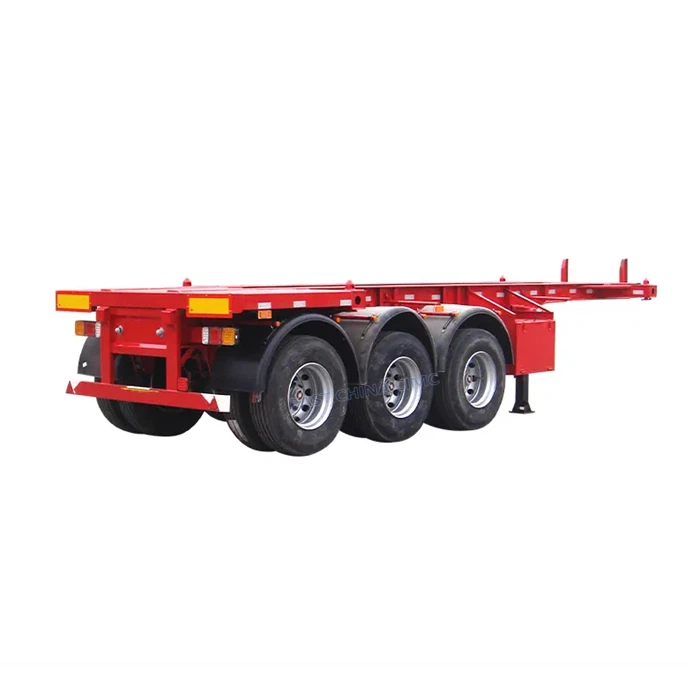
This specialization in container transportation allows for efficient and seamless transfer between different modes of transport. Containers can be easily moved from ships to skeleton trailers at ports and then transported to their final destinations by road. This multimodal transportation capability is a significant advantage, as it reduces the time and cost associated with moving goods.
2. Lightweight and High Payload Capacity
Skeleton trailers are known for their lightweight design compared to other types of trailers. Since they have a minimalistic frame structure, they weigh less than fully - enclosed trailers or flatbed trailers. This lightweight nature offers several benefits.
Firstly, it reduces the fuel consumption of the towing vehicle. When a vehicle pulls a lighter trailer, it requires less energy to move, resulting in lower fuel costs. This is especially important for long - haul transportation, where fuel expenses can be a significant portion of the operating costs.
Secondly, the lightweight design allows for a higher payload capacity. With less weight dedicated to the trailer itself, more weight can be allocated to the container and its contents. Our 20FT/40FT Skeleton Semi Trailer is optimized to provide a high payload - to - tare weight ratio, enabling customers to transport more goods in a single trip. This increases the efficiency of the transportation process and reduces the number of trips required to move a given amount of cargo, thereby saving time and money.
3. Versatility in Loading and Unloading
Skeleton trailers offer great versatility when it comes to loading and unloading containers. They can be loaded and unloaded using a variety of equipment, such as cranes, forklifts, and reach stackers.
At ports, large cranes are often used to lift containers onto and off skeleton trailers. These cranes can handle multiple containers quickly and efficiently, enabling a high - volume throughput. In smaller warehouses or distribution centers, forklifts or reach stackers can be used to load and unload containers. The open - frame design of the skeleton trailer allows easy access to the container from all sides, making it convenient for these loading and unloading operations.
This versatility in loading and unloading methods makes skeleton trailers suitable for a wide range of applications. Whether it is a large - scale port operation or a small - scale local distribution, skeleton trailers can adapt to different loading and unloading requirements.
4. Adaptability to Different Terrains and Routes
Another important purpose of skeleton trailers is their ability to adapt to different terrains and routes. They are designed to be robust and durable, capable of withstanding the challenges of various road conditions.
For long - distance highway transportation, skeleton trailers are built with features that ensure a smooth and stable ride. They are equipped with high - quality suspension systems that can absorb shocks and vibrations, protecting the container and its contents. The trailer's tires are also selected to provide good traction and durability on different road surfaces.
In addition, skeleton trailers can be used in off - road or rough - terrain applications. Some models, like our Bomb Cart|Terminal Container Chssis Trailer, are designed with reinforced frames and heavy - duty axles to handle the demands of rough terrains. This makes them suitable for use in construction sites, mining areas, and other locations where standard trailers may not be able to operate effectively.
5. Cost - Effectiveness
From a business perspective, skeleton trailers are a cost - effective solution for container transportation. The initial purchase cost of a skeleton trailer is generally lower than that of some other types of trailers. Their simple design means that there are fewer components, which reduces the manufacturing cost.
In addition to the lower purchase price, the operating costs of skeleton trailers are also relatively low. As mentioned earlier, their lightweight design leads to lower fuel consumption. Maintenance costs are also reduced because there are fewer parts that can wear out or break. The open - frame design makes it easy to access and inspect the components, facilitating quick and cost - effective maintenance.
Contact for Purchase and Negotiation
If you are in the market for a reliable and high - quality skeleton trailer, we are here to assist you. Our team of experts has extensive knowledge and experience in the design and manufacturing of skeleton trailers. We can provide you with detailed information about our products, including specifications, features, and pricing.
Whether you need a trailer for short - distance local transportation or long - haul international shipping, we have the right solution for you. Contact us today to start the negotiation process and find the perfect skeleton trailer to meet your business needs.
References
- "Container Transportation Handbook" by Rolf W. Immelmann
- "Transportation Logistics: A Supply Chain Perspective" by Donald J. Bowersox, David J. Closs, and M. Bixby Cooper