

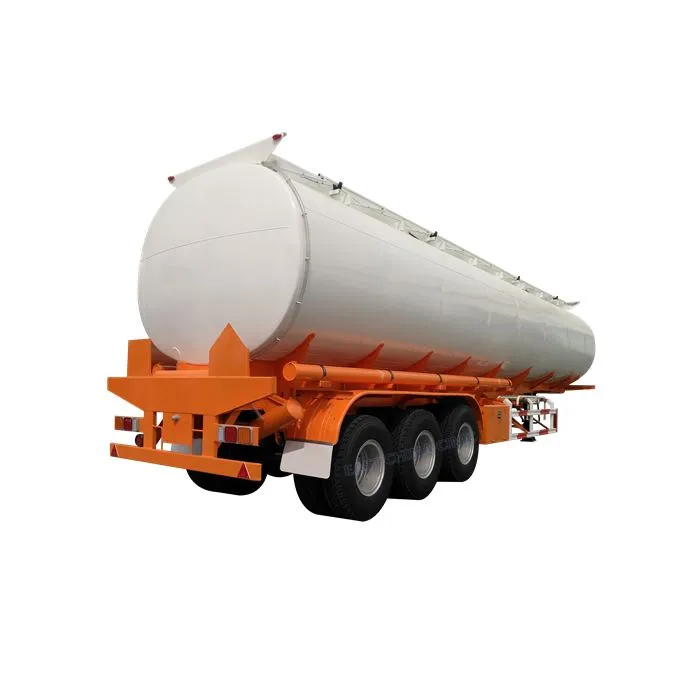
A fuel tanker trailer plays a pivotal role in the logistics infrastructure for transporting various fuels safely and efficiently. In this blog post, we'll explore the typical payload of a fuel tanker trailer, considering different types of fuels and trailer configurations. As a fuel tanker trailer supplier, we have in - depth knowledge of these aspects and can offer professional insights into this crucial topic.
Understanding Payload
Before we delve into the typical payloads, let's clarify what "payload" means in the context of a fuel tanker trailer. The payload is the amount of fuel that the trailer can carry. It is different from the gross vehicle weight rating (GVWR), which includes the weight of the trailer itself, the fuel, and any other equipment or accessories on it. The payload is calculated by subtracting the tare weight (the weight of the empty trailer) from the GVWR.
Factors Affecting Payload
Trailer Design and Structure
The design and structure of the fuel tanker trailer have a significant impact on its payload capacity. Different trailers are built with different materials, such as stainless steel or carbon steel. Stainless steel trailers are more corrosion - resistant but can be heavier than carbon steel ones. This difference in weight can affect the available payload. For example, a carbon steel fuel tanker trailer might have a higher payload capacity for the same GVWR compared to a stainless - steel one because of its lighter tare weight.
The shape and size of the tank also matter. Trailers with a larger diameter and shorter length might have a higher payload compared to those with a longer and thinner tank design, given the same overall volume. Our company offers a wide range of fuel tanker trailers with various designs to meet different payload requirements.
Fuel Type
Different fuels have different densities, which directly affect the payload. For example, gasoline has a density of approximately 0.72 - 0.78 g/cm³, while diesel fuel has a density of about 0.82 - 0.85 g/cm³. This means that for the same volume of the tanker, a diesel - carrying trailer will have a higher payload in terms of weight than a gasoline - carrying one.
In addition to gasoline and diesel, other fuels such as liquefied petroleum gas (LPG) and liquefied natural gas (LNG) are also commonly transported by fuel tanker trailers. These fuels are stored in a liquefied state under certain pressure and temperature conditions. LPG has a density of around 0.5 - 0.58 g/cm³, and LNG has a much lower density, about 0.42 - 0.47 g/cm³. Check out more about LNG LPG Tank Trailer for more detailed information.
Regulatory Requirements
Regulatory requirements in different regions can also limit the payload of a fuel tanker trailer. These regulations are in place to ensure road safety and environmental protection. For example, some areas have restrictions on the maximum axle load and overall vehicle weight. Compliance with these regulations is essential, and our company ensures that all our fuel tanker trailers meet the relevant regulatory standards.
Typical Payloads for Different Fuel Types
Gasoline and Diesel
In North America, a typical large - scale fuel tanker trailer used for transporting gasoline or diesel has a payload capacity ranging from 8,000 to 11,000 gallons (about 30,283 to 41,639 liters). In terms of weight, for gasoline, this can be approximately 24,000 to 34,800 pounds (10,886 to 15,785 kg), and for diesel, it can be around 27,600 to 40,000 pounds (12,519 to 18,144 kg).
LPG and LNG
LPG tanker trailers usually have payload capacities that can range from 10,000 to 30,000 pounds (4,536 to 13,608 kg) depending on the size and design of the trailer. LNG tanker trailers, on the other hand, because of LNG's lower density, can carry larger volumes but relatively lower weights. A common LNG tanker trailer might have a payload capacity of around 10,000 to 15,000 gallons (37,854 to 56,781 liters), which translates to a weight of about 6,000 to 10,000 pounds (2,722 to 4,536 kg).
Comparing Different Trailer Types
When it comes to choosing the right fuel tanker trailer, you may wonder about the differences between various types. For example, Oil Tank Semi Trailer VS ISO Tank, choose The Right Trailer For You can provide you with valuable insights.
Oil tank semi - trailers are a common choice for transporting fuels over long distances. They are designed to be attached to a tractor unit, offering flexibility in terms of transportation. These trailers can generally be customized to different payload capacities according to the customer's needs.
ISO tanks, on the other hand, are standardized containers that can be easily transported by different modes of transportation, such as trucks, trains, and ships. They are often used for international or inter - modal transportation of fuels. ISO tanks may have different payload capacities depending on their size and the type of fuel they are designed to carry.
Chemical Tanker Trailers
In addition to traditional fuel tanker trailers, we also offer EAST CHINA CIMC Chemical Tanker Trailer. Chemical tanker trailers are specially designed to transport various chemicals, including some fuels that are used in industrial applications.
The payload of chemical tanker trailers can vary widely depending on the nature of the chemical, which may have different handling requirements and densities. For some light - density chemicals, the trailer may be able to carry a relatively large volume, while for heavier or more hazardous chemicals, the payload might be restricted due to safety regulations.
Partner with Us for Your Fuel Tanker Trailer Needs
As a leading fuel tanker trailer supplier, we understand that choosing the right trailer with the appropriate payload is crucial for your business. Our team of experts can work with you to determine the best solution based on your specific requirements, whether you need to transport gasoline, diesel, LPG, LNG, or other fuels.
We offer high - quality fuel tanker trailers that are not only designed to meet the required payload capacities but also comply with all relevant safety and environmental regulations. Our trailers are built with durability and reliability in mind, ensuring that your fuel transportation operations run smoothly.
If you're interested in learning more about our fuel tanker trailers or are ready to discuss your purchasing needs, we encourage you to reach out to us. We're here to provide you with detailed product information, answer all your questions, and assist you in choosing the perfect fuel tanker trailer for your business.

References
- "Transportation of Liquid Fuels: A Comprehensive Guide", Logistics Research Institute, 2022
- "Safety Standards for Fuel Tanker Trailers", National Highway Traffic Safety Administration, 2021