

What is a Tipping Trailer?
As a supplier deeply entrenched in the world of tipping trailers, I'm excited to take you on a journey to explore what these remarkable pieces of equipment are, their functions, types, and applications.
Understanding the Basics of Tipping Trailers
A tipping trailer, also known as a tipper trailer, is a specialized type of trailer designed to transport and unload bulk materials efficiently. Its defining feature is the ability to tilt or tip the trailer bed to discharge its contents quickly and easily. This functionality makes it an indispensable tool in various industries, from construction and mining to agriculture and waste management.
The fundamental principle behind a tipping trailer is relatively simple. It consists of a trailer chassis, a cargo body, and a hydraulic or mechanical tipping mechanism. When the operator activates the tipping mechanism, the cargo body is raised at an angle, causing the materials inside to slide out under the force of gravity. This process is much faster and more convenient than manual unloading, saving time and labor costs.
Types of Tipping Trailers
There are several types of tipping trailers available on the market, each designed to meet specific requirements and applications. Let's take a closer look at some of the most common types:
Rear Tipper Trailers
Rear tipper trailers are the most widely used type of tipping trailers. They are designed to tip the cargo body towards the rear of the trailer. This type of trailer is ideal for transporting and unloading loose materials such as sand, gravel, dirt, and construction debris. Rear tipper trailers come in various sizes and configurations, including single-axle, tandem-axle, and multi-axle models. For a high - capacity option, you can check out our 6 Axles Rear Tipper Trailer.
End Tipper Trailers
End tipper trailers, as the name suggests, tip the cargo body from one end. They are typically used for transporting and unloading long and narrow materials, such as logs, pipes, and steel beams. End tipper trailers offer greater flexibility in terms of unloading direction and can be more suitable for certain job sites. You can learn more about our End Tipper Trailer.
Side Tipper Trailers
Side tipper trailers are designed to tip the cargo body to one side. This type of trailer is useful when you need to unload materials along the side of the trailer, such as in situations where space is limited or when you need to distribute the load evenly along a specific area. Side tipper trailers are commonly used in the transportation of bulk liquids, as well as in the construction and mining industries.
Hydraulic Container Dump Semi Trailers
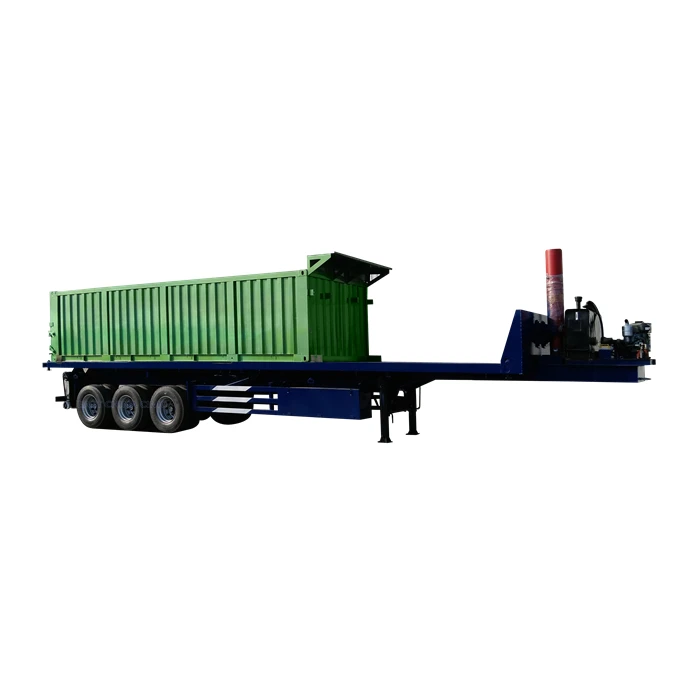
Hydraulic container dump semi - trailers are a specialized type of tipping trailer that is used for transporting and unloading large containers. These trailers are equipped with a powerful hydraulic system that can lift and tip the container to discharge its contents. They are often used in waste management, recycling, and shipping industries. For more information on our Hydraulic Container Dump Semi Trailer, click the link.
Components of a Tipping Trailer
To understand how a tipping trailer works, it's important to familiarize yourself with its key components:
Chassis
The chassis is the foundation of the tipping trailer. It provides the structural support for the cargo body and all other components. The chassis is typically made of high - strength steel to withstand the heavy loads and stresses associated with transporting and tipping materials.
Cargo Body
The cargo body is the part of the trailer that holds the materials. It can be made of various materials, including steel, aluminum, or fiberglass, depending on the specific application and requirements. The cargo body is designed to be durable, corrosion - resistant, and easy to clean.
Tipping Mechanism
The tipping mechanism is the heart of the tipping trailer. It is responsible for raising and lowering the cargo body. There are two main types of tipping mechanisms: hydraulic and mechanical. Hydraulic tipping mechanisms are the most common and offer several advantages, including smooth operation, precise control, and high lifting capacity. Mechanical tipping mechanisms, on the other hand, are simpler and more cost - effective but may have limitations in terms of lifting capacity and speed.
Hydraulic System
If the tipping trailer uses a hydraulic tipping mechanism, it will be equipped with a hydraulic system. The hydraulic system consists of a hydraulic pump, cylinders, hoses, and valves. The pump pressurizes the hydraulic fluid, which is then sent to the cylinders to lift the cargo body. The valves control the flow and direction of the hydraulic fluid, allowing for precise control of the tipping process.
Landing Gear
Landing gear is a set of supports that are used to keep the trailer stable when it is not attached to a tractor. It is typically located at the front of the trailer and can be raised or lowered manually or hydraulically.
Applications of Tipping Trailers
Tipping trailers are used in a wide range of industries and applications. Here are some of the most common ones:

Construction Industry
In the construction industry, tipping trailers are used to transport and unload construction materials such as sand, gravel, cement, and bricks. They are also used to remove construction debris and waste from job sites. Tipping trailers help to improve efficiency and productivity on construction sites by reducing the time and labor required for material handling.
Mining Industry
The mining industry relies heavily on tipping trailers to transport and unload large quantities of ore, coal, and other minerals. Tipping trailers are designed to withstand the harsh conditions and heavy loads associated with mining operations. They are often used in open - pit mines and underground mines to move materials from the extraction site to the processing plant or storage area.
Agriculture Industry
In the agriculture industry, tipping trailers are used to transport and unload agricultural products such as grains, hay, and manure. They are also used to move soil and other materials for land preparation and landscaping. Tipping trailers make it easier for farmers to handle and distribute large volumes of materials, improving the efficiency of agricultural operations.
Waste Management Industry
The waste management industry uses tipping trailers to collect and transport waste from residential, commercial, and industrial areas. Tipping trailers are equipped with special features such as compaction systems and sealed bodies to prevent the leakage of waste and reduce odors. They are also used to transport recyclable materials to recycling facilities.
Advantages of Using Tipping Trailers
There are several advantages to using tipping trailers:
Efficiency
Tipping trailers offer a highly efficient way to transport and unload bulk materials. The ability to quickly tip the cargo body and discharge the materials saves time and labor compared to manual unloading methods.
Versatility
With different types of tipping trailers available, they can be used for a wide range of applications and materials. Whether you need to transport loose materials, long and narrow objects, or large containers, there is a tipping trailer that can meet your needs.
Safety
Tipping trailers are designed with safety in mind. They are equipped with features such as locking mechanisms, safety valves, and warning signs to prevent accidents and ensure the safety of operators and other personnel.
Cost - Effectiveness
In the long run, using tipping trailers can be cost - effective. They reduce the need for manual labor, improve productivity, and minimize the risk of damage to materials during unloading.
Maintenance and Safety Considerations
To ensure the safe and efficient operation of tipping trailers, it is important to follow proper maintenance and safety procedures. Here are some key points to keep in mind:
Regular Maintenance
Regular maintenance is essential to keep the tipping trailer in good working condition. This includes checking the tires, brakes, hydraulic system, and other components for wear and tear. It is also important to lubricate moving parts and keep the trailer clean.
Operator Training
Operators should receive proper training on how to operate the tipping trailer safely. They should be familiar with the controls, safety features, and operating procedures of the trailer. Training should also cover emergency procedures in case of a malfunction or accident.
Safety Checks
Before each use, operators should perform a thorough safety check of the tipping trailer. This includes checking the hydraulic system for leaks, ensuring that the landing gear is in good condition, and verifying that all safety devices are working properly.
Conclusion
In conclusion, tipping trailers are versatile and essential pieces of equipment in many industries. They offer a convenient and efficient way to transport and unload bulk materials, improving productivity and reducing costs. As a supplier of tipping trailers, we are committed to providing high - quality products that meet the diverse needs of our customers.
If you are interested in learning more about our tipping trailers or are considering a purchase, we encourage you to contact us for a detailed discussion. Our team of experts is ready to assist you in finding the right tipping trailer for your specific requirements. We look forward to the opportunity to work with you and contribute to the success of your operations.
References
- "Trailer Handbook" - A comprehensive guide on trailer design, operation, and maintenance.
- Industry reports on the construction, mining, agriculture, and waste management sectors highlighting the use of tipping trailers.
- Manufacturer's specifications and technical documentation for various tipping trailer models.